
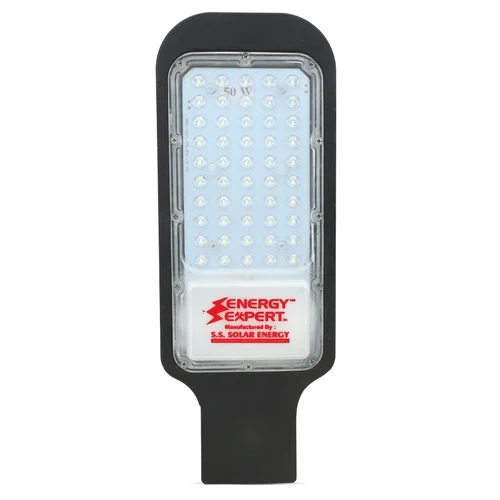
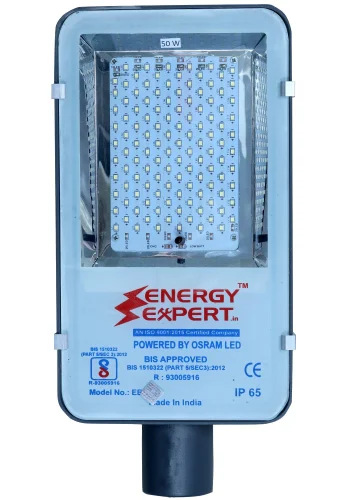
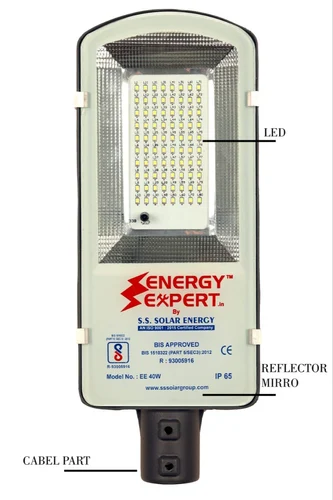
90W AC LED Street Light Price | Get the Best Quote
Original price was: ₹1,800.00.₹800.00Current price is: ₹800.00.
Buy 90W AC LED Street Light from S S Solar Energy for efficient outdoor lighting. Reliable LED performance, low maintenance and durable design. Get a quote!
Description
A 90W AC LED Street Light is an outdoor lighting fixture designed to provide reliable illumination for roads, streets, parking areas, residential communities, industrial premises, commercial properties, campuses, and other outdoor spaces. It uses LED technology and operates through a suitable AC power supply, making it a practical choice for locations where grid electricity or compatible AC infrastructure is available.
Compared with conventional street lighting technologies, LED fixtures can offer efficient illumination, controlled light distribution, and relatively low routine maintenance. However, the actual performance of a 90W street light depends on factors such as lumen output, LED efficiency, optical design, driver quality, thermal management, and installation conditions.
The 90W LED street light is particularly useful for projects that require a fixture with a higher power rating than lower-wattage options while still maintaining the advantages of LED-based outdoor lighting.
What Is a 90W AC LED Street Light?
A 90W AC LED Street Light is an LED-based outdoor lighting fixture with a nominal rated power of 90 watts. It converts electrical energy from an AC supply into visible light through an LED module and integrated driver.
A typical fixture consists of several important components:
- LED module or LED chips
- LED driver
- Optical lens or light distribution system
- Heat sink or thermal management system
- Outdoor housing
- Electrical connections
- Pole or bracket mounting mechanism
The 90W rating represents the nominal electrical power of the fixture. It does not directly indicate how bright the fixture will be or how much area it can illuminate.
For a proper product comparison, buyers should also check lumen output, luminous efficacy, beam angle, mounting height, optical distribution, and photometric performance.
How Does a 90W AC LED Street Light Work?
A 90W AC LED street light receives electricity from an AC power supply. The integrated LED driver manages the electrical power supplied to the LED module, allowing the LEDs to generate visible light.
The basic working process is:
AC Power Supply → LED Driver → LED Module → Optical System → Outdoor Illumination
The LED module produces light, while the optical system helps distribute that light toward the road or target area. At the same time, the housing and heat-dissipation system help manage the heat generated during operation.
For reliable performance, the fixture should be operated within the voltage, temperature, and environmental conditions specified by the manufacturer.
Why Is 90W Used for Street Lighting?
A 90W power rating can be considered for outdoor applications that require a suitable level of illumination and where a lower-power fixture may not meet the project’s requirements.
The suitability of a 90 watt LED street light depends on the complete lighting design rather than wattage alone.
Important factors include:
- Required illumination
- Lumen output
- Road or area dimensions
- Mounting height
- Pole spacing
- Beam distribution
- Lighting uniformity
- Environmental conditions
A 90W fixture can therefore be considered for various applications where its photometric performance matches the project’s requirements.
90W LED Street Light for Outdoor Applications
A 90W outdoor LED street light can be used in different outdoor environments where reliable illumination is required.
Potential applications include:
- Residential roads
- Commercial areas
- Industrial premises
- Parking facilities
- Institutional campuses
- Warehouses
- Logistics areas
- Service roads
- Public outdoor spaces
- Municipal lighting projects
The exact suitability of the fixture depends on its technical specifications and the requirements of the installation site.
90W LED Street Light for Road Illumination
Road lighting requires more than simply producing a high amount of light. The fixture should distribute light appropriately across the road while maintaining suitable illumination and uniformity.
A 90W LED road light can be considered for suitable road applications when its lumen output, beam distribution, mounting height, and pole spacing are properly matched to the road layout.
For accurate planning, photometric data should be used to determine the expected illumination pattern.
90W AC LED Street Light for Commercial and Industrial Areas
Commercial and industrial locations often include roads, parking areas, loading zones, entrances, and large outdoor spaces that require dependable lighting.
A 90W AC LED fixture can be considered for such applications where its:
- Light output
- Optical distribution
- IP protection
- Housing construction
- Thermal management
- Electrical specifications
meet the requirements of the installation.
The final product selection should always be based on the complete technical specification rather than the 90W rating alone.
90W LED Street Light vs Lower-Wattage Fixtures
The choice between a 90W fixture and a lower-wattage LED street light depends on the required lighting performance.
A higher wattage does not automatically mean better performance. Instead, buyers should compare the lumen output per watt, optical efficiency, light distribution, and required illumination.
For example, a well-designed lower-wattage fixture may outperform a poorly designed higher-wattage fixture in a particular application.
Therefore, the goal should be to select the fixture that provides the required lighting performance with appropriate energy consumption and installation costs.
90W AC LED Street Light Specifications
The performance of a 90W AC LED Street Light depends on several technical parameters beyond its 90W power rating. Specifications such as lumen output, luminous efficacy, input voltage, LED chip, driver, beam angle, IP rating, housing material, and thermal management help determine whether a fixture is suitable for a particular outdoor application.
Before purchasing a 90W LED street light, buyers should review the manufacturer’s latest datasheet and compare the complete product configuration.
Technical Specifications of 90W AC LED Street Light
| IP Rating | IP65 |
| Usage/Application | Outdoor |
| Brand | Energy Expert |
| Wattage | 90W |
| Frequency | 50Hz |
90W LED Street Light Wattage
The 90W rating represents the nominal electrical power of the fixture under its specified operating conditions.
However, wattage should not be treated as a direct measurement of brightness.
Two different 90W LED street lights can produce different levels of illumination because of differences in:
- LED efficiency
- Lumen output
- Driver efficiency
- Optical design
- Thermal management
- Fixture construction
For this reason, a buyer should compare the complete technical specifications rather than selecting a product simply because it has a 90W rating.
90W LED Street Light Lumen Output and Luminous Efficacy
Lumen output indicates the total amount of visible light produced by a fixture, while luminous efficacy indicates how efficiently electrical power is converted into visible light.
The basic relationship is:
Luminous Efficacy = Lumen Output ÷ Power Consumption
For a 90W LED street light, both lumen output and efficacy are important when comparing lighting performance.
A fixture with higher lumen output at the same power rating may provide more available light, provided the measurements are based on comparable testing conditions.
Why Lumen Output Matters
A high wattage does not necessarily mean high brightness.
When comparing 90W street lights, consider:
- Total lumens
- Lumens per watt
- LED chip efficiency
- Optical efficiency
- Driver efficiency
- Photometric performance
This provides a more meaningful comparison between different products.
Color Temperature Options
Color temperature affects the visual appearance of the light produced by an LED street light.
Depending on the product configuration, a 90W LED street light may be available in different color temperatures.
Cool White 90W LED Street Light
Cool white lighting provides a cleaner and brighter visual appearance and may be suitable for roads, industrial areas, commercial properties, parking facilities, and other outdoor applications.
Neutral White 90W LED Street Light
Neutral white provides a balanced appearance between cool and warm lighting. It can be considered for applications where a more natural-looking outdoor environment is preferred.
Warm White 90W LED Street Light
Warm white produces a softer and warmer visual appearance and may be considered for selected residential, recreational, architectural, or pedestrian-focused outdoor spaces.
The appropriate color temperature should be selected according to the project’s visual requirements and lighting design.
IP Rating and Weather Protection
An outdoor 90W AC LED street light should provide an appropriate level of protection against environmental exposure.
The IP rating indicates the enclosure’s protection against the entry of solid particles and water.
When selecting a fixture, consider its exposure to:
- Rain
- Dust
- Humidity
- Water splash
- Pollution
- Temperature variations
The required IP rating depends on the installation environment. Always verify the actual rating from the manufacturer’s product documentation.
Housing Material and Heat Dissipation
The housing protects the LED module, driver, and other internal components while also contributing to thermal management.
A well-designed 90W outdoor LED street light may use a metal housing or other suitable material designed for outdoor operation.
Important housing considerations include:
- Mechanical strength
- Corrosion resistance
- Heat transfer
- Weather protection
- Overall structural design
Aluminium Housing
Aluminium is commonly used in LED lighting fixtures because of its combination of strength, relatively low weight, and thermal conductivity.
A properly designed aluminium housing can help transfer heat away from the LED module and support effective thermal management.
Heat Sink Design
LEDs generate heat during operation, making heat dissipation an important part of fixture design.
A properly designed heat sink can help transfer heat away from the LED module and release it into the surrounding environment.
Thermal performance can depend on:
- Heat sink surface area
- Housing design
- Thermal interface
- Ambient temperature
- Air circulation
- Fixture orientation
LED Driver Specifications
The LED driver regulates the electrical power supplied to the LED module and is an important component of an AC-powered street light.
When evaluating a 90W AC LED street light, check the driver’s:
- Input voltage range
- Operating frequency
- Efficiency
- Protection features
- Operating temperature
- Compatibility with the LED module
- Manufacturer specifications
A properly matched driver can support stable operation and reliable performance.
Beam Angle and Light Distribution
Beam angle describes how light is distributed from the fixture.
The optical system of a 90W LED street light should direct useful illumination toward the required road or outdoor area.
The appropriate light distribution depends on:
- Road width
- Mounting height
- Pole spacing
- Fixture orientation
- Required illumination
- Desired uniformity
A wider beam can distribute light over a broader area, while a more controlled distribution can concentrate light toward specific areas.
For professional projects, photometric data should be reviewed before finalizing the fixture.
Mounting Type
A 90W LED street light is generally designed for pole or suitable mounting-arm installation, depending on the specific product configuration.
Before installation, verify:
- Mounting diameter
- Bracket dimensions
- Fixture weight
- Mounting angle
- Pole compatibility
- Required hardware
Correct mounting helps maintain mechanical stability and allows the optical system to perform as intended.
Operating Temperature
The operating temperature range is an important specification for outdoor LED lighting.
The fixture should be suitable for the ambient conditions of the installation site.
High temperatures can place additional stress on LED modules, drivers, and other electronic components, making thermal design particularly important for outdoor installations.
Always check the manufacturer’s specified operating temperature range before selecting the product for a specific environment.
Features of 90W AC LED Street Light
A 90W AC LED Street Light combines LED technology, an AC-compatible driver, outdoor housing, thermal management, and an optical system to provide controlled illumination for roads and other outdoor areas.
The actual features can vary by manufacturer and model, so product specifications should always be verified through the relevant datasheet.
High-Efficiency LED Technology
The 90W LED street light uses LED technology to convert electrical energy into visible light.
Compared with many traditional lighting technologies, LED systems can provide efficient illumination with controlled light distribution.
When evaluating efficiency, consider both the fixture’s lumen output and luminous efficacy, rather than judging performance from wattage alone.
High-Brightness Outdoor Illumination
A properly designed 90W LED fixture can provide substantial illumination for suitable outdoor applications.
Its actual brightness depends on:
- LED output
- Luminous efficacy
- Optical efficiency
- Driver performance
- Beam distribution
- Installation height
The fixture should be selected according to the required illumination rather than wattage alone.
Uniform Light Distribution
Good street lighting should provide reasonably uniform illumination across the target area.
The optical system of a 90W outdoor LED street light helps distribute light according to the fixture’s intended application.
Proper pole spacing, mounting height, beam angle, and fixture orientation are also important for achieving suitable lighting uniformity.
Durable Outdoor Housing
The housing protects the internal components from mechanical and environmental exposure.
Depending on the product design, the housing may provide:
- Structural protection
- Weather resistance
- Corrosion resistance
- Heat dissipation
- Protection for electrical components
A durable housing can be particularly useful for street lights installed in demanding outdoor environments.
Weather-Resistant Construction
Street lights operate outdoors and can be exposed to rain, dust, humidity, sunlight, and temperature variations.
A suitably designed 90W AC LED street light should have environmental protection appropriate for its intended installation.
The IP rating, housing construction, sealing, cable entry, and overall enclosure design should be considered when evaluating outdoor suitability.
Efficient Power Consumption
The 90W rating represents the nominal power consumption of the fixture under specified operating conditions.
LED technology can provide efficient illumination, but actual energy performance depends on the complete fixture design.
For meaningful comparisons, check:
Lumen Output ÷ Power Consumption = Luminous Efficacy
This helps buyers evaluate how much light the fixture produces for the electrical power it uses.
Long Operating Life
LED lighting systems are designed for long-term operation, but the actual life of a complete fixture depends on multiple components and operating conditions.
Factors that can influence long-term performance include:
- LED quality
- Driver quality
- Thermal management
- Voltage conditions
- Operating temperature
- Environmental exposure
- Installation quality
Always check the manufacturer’s stated lifetime and the conditions under which it was determined.
Low Maintenance Requirements
LED street lights generally require less routine maintenance than many older lighting technologies.
Typical maintenance activities may include:
- Cleaning the fixture.
- Checking electrical connections.
- Inspecting the LED driver.
- Checking mounting hardware.
- Inspecting the housing.
- Checking for moisture or corrosion.
The required maintenance frequency depends on the installation environment and manufacturer recommendations.
Stable and Flicker-Free Lighting
A properly designed LED driver can support stable operation of the LED module.
When evaluating a 90W AC LED street light, buyers should consider driver quality and available technical information regarding flicker performance.
Stable lighting can be particularly important for roads, parking areas, commercial premises, and other locations where consistent illumination is required.
Instant Start
LED street lights can provide light almost immediately after the fixture receives the required electrical supply.
Unlike lighting technologies that may require a warm-up period, LED fixtures generally reach their operating light output quickly.
This can be useful for:
- Roads
- Parking areas
- Security lighting
- Industrial premises
- Commercial properties
- Outdoor access areas
Effective Heat Dissipation
Thermal management is an important feature of an LED lighting fixture.
The LED module and driver generate heat during operation, so the fixture should be designed to transfer and dissipate heat effectively.
A suitable thermal design may include:
- Aluminium housing
- Heat sink
- Adequate surface area
- Thermal interface
- Proper airflow
Good thermal management can help maintain suitable operating temperatures under the manufacturer’s specified conditions.
Controlled Optical Distribution
The optical system determines how light leaves the fixture and reaches the target area.
A 90W LED street light can use an optical lens or reflector system designed for specific outdoor applications.
Controlled light distribution can help:
- Direct light toward the road
- Improve usable illumination
- Reduce unnecessary light spill
- Support better lighting uniformity
- Match the fixture to different road layouts
The appropriate optical distribution should be selected according to mounting height, road width, pole spacing, and lighting requirements.
AC Power Compatibility
The 90W AC LED street light is designed to operate using a compatible AC electrical supply.
Before installation, verify:
- Input voltage
- Frequency
- Driver specifications
- Electrical protection
- Wiring requirements
- Earthing requirements
The fixture should always be operated within the electrical conditions specified by the manufacturer.
Suitable for Multiple Outdoor Applications
One of the advantages of a 90W LED street light is its potential use across different outdoor environments.
Depending on the product’s specifications, applications can include:
- Roads and streets
- Residential areas
- Parking facilities
- Industrial premises
- Commercial properties
- Institutional campuses
- Warehouses
- Logistics areas
- Service roads
- Municipal projects
The appropriate model should be selected according to the lighting requirements and environmental conditions of each application.
Easy Integration With Street Lighting Infrastructure
Where compatible electrical and mounting infrastructure already exists, an AC LED street light can be integrated into an outdoor lighting system with suitable installation planning.
Before replacing or installing fixtures, verify:
- Pole compatibility
- Mounting arrangement
- Electrical supply
- Cable condition
- Fixture dimensions
- Driver requirements
- Required lighting performance
This can help reduce compatibility issues during installation.
Benefits of Using a 90W AC LED Street Light
A 90W AC LED Street Light can be a practical option for outdoor lighting projects where suitable AC power infrastructure is available. Its LED-based design, optical control, and outdoor construction can provide several advantages for roads, parking areas, commercial properties, industrial premises, and other outdoor applications.
The actual benefits depend on the fixture’s specifications, installation design, operating conditions, and site requirements.
Efficient Outdoor Lighting
LED technology can provide efficient outdoor illumination by producing useful light from relatively low electrical power compared with many conventional lighting technologies.
A 90W fixture should be evaluated using its actual lumen output and luminous efficacy to determine its lighting efficiency.
This makes the 90W LED street light suitable for projects where efficient illumination is an important consideration.
Helps Reduce Electricity Consumption
An efficient LED lighting system can help manage electricity consumption while providing the required illumination.
However, actual energy savings depend on the lighting technology being replaced, operating hours, fixture efficiency, and lighting requirements.
For accurate comparison, consider:
Power Consumption + Operating Hours + Required Light Output
rather than comparing wattage alone.
Provides Bright and Uniform Illumination
A properly designed 90W LED street light can provide useful illumination across roads and outdoor areas.
Its optical system helps distribute light according to the intended application, while factors such as mounting height and pole spacing influence overall uniformity.
Good lighting design can help minimize excessively bright and dark areas across the target zone.
Improves Road Visibility
Appropriately designed street lighting can improve visibility for drivers, pedestrians, cyclists, and other road users during low-light conditions.
A 90W LED road light can support visibility by providing suitable illumination when its:
- Lumen output
- Beam distribution
- Mounting height
- Pole spacing
- Light orientation
are correctly matched to the road layout.
Lower Routine Maintenance
LED street lights generally require limited routine maintenance compared with many older lighting technologies.
Regular maintenance can include:
- Cleaning the fixture.
- Inspecting electrical connections.
- Checking the driver.
- Inspecting mounting hardware.
- Checking for corrosion or moisture.
- Verifying fixture alignment.
This can help reduce routine maintenance requirements over the operating period.
Supports Long-Term Lighting Performance
A properly designed and installed 90W outdoor LED street light can provide consistent lighting performance over extended operation.
Long-term performance depends on:
- LED quality
- Driver reliability
- Heat dissipation
- Input voltage conditions
- Environmental exposure
- Installation quality
- Maintenance
Selecting a product with appropriate technical specifications can help support reliable operation.
Suitable for Larger Outdoor Areas
The 90W power class can be considered for applications requiring more lighting output than certain lower-power fixtures, depending on the product’s lumen output and optical design.
Potential applications include:
- Wider roads
- Parking areas
- Industrial premises
- Commercial properties
- Large campuses
- Outdoor access roads
- Logistics areas
The actual coverage should be determined through lighting calculations or photometric planning rather than wattage alone.
Can Help Reduce Overall Lighting Operating Costs
The total cost of outdoor lighting includes more than the initial purchase price.
A properly selected LED system can help manage long-term costs through:
- Efficient electrical operation
- Reduced routine maintenance
- Long-term LED performance
- Controlled light distribution
- Reduced frequency of replacement
For an accurate evaluation, compare the total cost of ownership rather than only the purchase price.
Suitable for Commercial and Infrastructure Projects
A 90W LED street light can be considered for various commercial, industrial, institutional, and infrastructure applications.
It may be used for:
- Commercial roads
- Industrial campuses
- Residential developments
- Parking facilities
- Institutional campuses
- Municipal roads
- Warehouses
- Logistics facilities
- Public access roads
- Large outdoor premises
For larger projects, technical specifications and photometric data should be reviewed before procurement.
Controlled Light Distribution
The optical design of an LED street light determines how effectively light reaches the target area.
A suitable optical distribution can help direct illumination toward the road or outdoor space while limiting unnecessary light spill.
This is particularly important when the fixture is installed near:
- Buildings
- Residential properties
- Pedestrian areas
- Adjacent roads
- Parking facilities
The correct beam distribution should be selected according to the application and lighting layout.
Flexible Outdoor Lighting Solution
The combination of LED technology, AC operation, outdoor housing, and different optical configurations makes the 90W AC LED street light adaptable to a range of lighting projects.
Depending on the specific model, it can be considered for:
- Urban roads
- Residential streets
- Industrial roads
- Parking areas
- Commercial premises
- Campuses
- Warehouses
- Service roads
The product should always be selected according to the actual lighting and environmental requirements.
No Battery or Solar Panel Required for Standard AC Operation
Unlike a typical solar street lighting system, a standard AC-powered LED street light does not require a solar panel or battery for normal operation.
This can simplify the system where a reliable AC power supply is already available.
The basic setup generally consists of:
AC Supply → LED Driver → LED Module → Optical System
This can make AC LED street lighting a straightforward option for locations with existing electrical infrastructure.
Immediate Light Availability
LED technology generally provides illumination quickly after the fixture receives the required electrical supply.
This can be useful in applications where lighting needs to become available immediately after switching on or through an automated control system.
Potential applications include:
- Road lighting
- Parking areas
- Industrial premises
- Security areas
- Commercial properties
Applications of 90W AC LED Street Light
A 90W AC LED Street Light can be used across a wide range of outdoor lighting applications where suitable AC power infrastructure is available. The actual suitability of the fixture depends on its lumen output, optical distribution, mounting height, IP rating, environmental conditions, and the lighting requirements of the site.
90W LED Street Light for Roads
A 90W LED street light for roads can be used for residential streets, internal roads, access roads, commercial roads, and other suitable roadway applications.
Road lighting requires appropriate light distribution rather than simply high brightness. The fixture should be selected according to:
- Road width
- Mounting height
- Pole spacing
- Lumen output
- Beam distribution
- Required illumination
- Lighting uniformity
For larger roadway projects, photometric calculations can help determine whether a 90W fixture can achieve the required lighting performance.
90W LED Street Light for Highways
Highway and major-road lighting can have different requirements from ordinary residential roads.
A 90W LED street light for highways may be considered for selected sections such as:
- Service roads
- Entry and exit areas
- Intersections
- Access roads
- Toll or facility areas
- Supporting infrastructure
For high-speed roads, lighting design should consider roadway geometry, mounting height, pole spacing, glare control, uniformity, and applicable lighting requirements.
A higher wattage does not automatically make a fixture suitable for highway applications.
90W LED Street Light for Residential Areas
Residential communities require reliable outdoor illumination for roads, entrances, pedestrian areas, and internal streets.
A 90W LED street light for residential areas can be considered where its light output and optical distribution are appropriate for the community’s road layout.
Important considerations include:
- Road width
- Pole height
- Pole spacing
- Required illumination
- Glare control
- Light spill toward homes
Selecting an appropriate beam distribution can help provide useful illumination while limiting unnecessary light toward nearby properties.
90W LED Street Light for Parking Areas
Parking areas require lighting that supports visibility for vehicles and pedestrians.
A 90W LED street light for parking areas can be used in:
- Shopping complexes
- Residential parking
- Office premises
- Hospitals
- Hotels
- Industrial facilities
- Institutional campuses
For parking applications, fixture positioning, mounting height, beam distribution, and pole spacing should be planned to minimize dark spots.
90W LED Street Light for Industrial Areas
Industrial facilities often have large outdoor spaces that require dependable illumination.
A 90W LED street light for industrial areas can be considered for:
- Internal roads
- Factory premises
- Loading areas
- Storage yards
- Parking zones
- Entry and exit roads
- Warehouse surroundings
Industrial environments may have higher levels of dust, heat, humidity, or pollution, so the fixture’s housing, IP rating, thermal management, and operating temperature range should be evaluated carefully.
90W LED Street Light for Commercial Areas
Commercial properties often need outdoor lighting for roads, parking areas, entrances, walkways, and service zones.
A 90W LED street light for commercial areas can be used for suitable applications around:
- Shopping centres
- Office complexes
- Hotels
- Retail properties
- Business parks
- Commercial campuses
The lighting design should provide suitable visibility while maintaining an appropriate appearance for the property.
90W LED Street Light for Public Roads
Public roads can require consistent outdoor illumination to support visibility during nighttime and low-light conditions.
A 90W LED street light for public roads may be considered for suitable road layouts where the fixture’s photometric performance meets the required lighting criteria.
Before large-scale installation, project specifications, local requirements, road geometry, and lighting calculations should be considered.
90W LED Street Light for Municipal Projects
Municipal and infrastructure projects may involve:
- Public roads
- Residential streets
- Community areas
- Parking facilities
- Public access roads
- Urban infrastructure
- Government premises
For municipal procurement, buyers may need detailed product documentation, technical specifications, warranty information, testing documentation, and other project-specific requirements.
A sample or technical evaluation may also be appropriate before bulk procurement.
90W LED Street Light for Campuses
Large campuses often contain internal roads, parking areas, pedestrian zones, and service routes.
A 90W LED street light for campuses can be considered for:
- Educational campuses
- Corporate campuses
- Hospital campuses
- Institutional properties
- Residential communities
Different areas within the same campus may require different lighting levels and optical distributions, so the fixture should be selected according to each zone’s requirements.
90W LED Street Light for Warehouses
Warehouse facilities often require outdoor illumination around entrances, loading areas, parking spaces, and access roads.
A 90W LED street light for warehouses can provide outdoor lighting where suitable AC infrastructure is available.
For warehouse environments, consider:
- Mounting height
- Loading activity
- Vehicle movement
- Required illumination
- Dust levels
- Weather exposure
- Pole positioning
90W LED Street Light for Logistics Areas
Logistics facilities can include large yards, vehicle movement areas, loading zones, and access roads that require dependable outdoor lighting.
A 90W LED fixture may be considered for suitable logistics applications when its lumen output and optical distribution meet the site’s requirements.
Proper lighting planning can help improve visibility around:
- Loading zones
- Vehicle routes
- Parking areas
- Entry gates
- Storage yards
- Service roads
90W LED Street Light for Service and Access Roads
Service roads and access routes can require focused outdoor illumination for vehicles and pedestrians.
A 90W LED street light can be considered for these areas when the fixture provides suitable light distribution and the pole arrangement supports adequate coverage.
The installation should account for:
- Road width
- Traffic movement
- Mounting height
- Pole spacing
- Required illumination
- Environmental conditions
90W LED Street Light for Large Outdoor Areas
Large outdoor areas may include industrial yards, commercial premises, campuses, parking facilities, and infrastructure sites.
A 90W fixture can be used where its photometric performance is suitable for the required area.
However, large areas may require multiple fixtures rather than relying on a single high-power light. Proper pole layout and lighting calculations are important for achieving suitable illumination and uniformity.
90W LED Street Light for Security and Perimeter Lighting
Outdoor perimeter areas may require illumination along boundaries, gates, access roads, and movement zones.
A 90W LED street light can be considered for suitable perimeter lighting applications where its beam distribution and mounting arrangement provide the required coverage.
For security-focused installations, avoid creating excessive dark zones between fixtures.
Selecting the Right 90W Street Light for Different Applications
The same 90W AC LED street light may not be ideal for every application.
Before selecting the product, evaluate:
- Application type – Road, parking, industrial area, campus, etc.
- Required illumination – Determine the lighting level required for the area.
- Lumen output – Check the actual fixture lumens.
- Optical distribution – Select an appropriate beam pattern.
- Mounting height – Match the fixture with the planned pole height.
- Pole spacing – Check the expected distance between fixtures.
- Environmental conditions – Consider dust, rain, humidity, heat, and pollution.
- IP rating – Verify suitability for outdoor exposure.
- Electrical supply – Confirm AC input compatibility.
- Photometric data – Use lighting calculations for larger projects.
Application-Based Selection Example
| Application | Key Considerations |
|---|---|
| Residential Roads | Uniformity, glare, light spill |
| Commercial Areas | Visibility, appearance, parking coverage |
| Industrial Areas | IP protection, dust, thermal conditions |
| Parking Areas | Pole layout, uniform coverage |
| Warehouses | Loading zones, vehicle movement |
| Campuses | Roads, pedestrian areas, parking |
| Municipal Roads | Technical compliance, uniformity |
| Logistics Areas | Large-area coverage, vehicle movement |
| Service Roads | Road width, pole spacing |
| Perimeter Areas | Coverage and dark-zone control |
The 90W rating alone should not determine the application. The best fixture is one whose complete technical and optical characteristics match the lighting requirements of the site.
90W AC LED Street Light vs Traditional Street Lights
Traditional street lighting systems have historically used technologies such as high-pressure sodium, metal halide, mercury-vapour, or other conventional light sources. LED technology offers a different approach by combining semiconductor light sources with dedicated drivers and optical systems.
A 90W AC LED Street Light can provide advantages in efficiency, light control, maintenance, and operating performance, but the actual benefit depends on the specific fixture and the technology being replaced.
90W LED Street Light vs Conventional Street Lighting
| Feature | 90W AC LED Street Light | Traditional Street Light |
|---|---|---|
| Light Source | LED | Conventional lamp technology |
| Power Rating | 90W | Depends on lamp and ballast/system |
| Light Output | Product-specific | Depends on lamp type |
| Energy Efficiency | Generally high with suitable design | Varies by technology |
| Start-Up | Rapid | May require warm-up for some technologies |
| Light Distribution | Controlled through optics | Depends on reflector/lamp design |
| Maintenance | Generally lower routine requirements | Can require more frequent lamp/ballast servicing |
| Heat Management | Integrated thermal design | Depends on lamp and fixture |
| Directional Control | Highly controllable | Varies by fixture |
| Outdoor Protection | Product-specific IP rating | Depends on fixture |
| Driver/Ballast | LED driver | Ballast/control gear may be required |
| Replacement | LED fixture/module/driver depending on design | Lamp and associated components |
| Operating Cost | Depends on efficiency and hours | Depends on power consumption and maintenance |
The comparison should always be based on actual measured performance and project requirements rather than technology type alone.
90W LED Street Light Energy Efficiency
One of the key reasons for considering LED street lighting is its potential for efficient conversion of electrical energy into useful illumination.
For a 90W LED street light, efficiency can be evaluated using:
Luminous Efficacy = Lumens ÷ Watts
For example, two fixtures may both consume 90W but produce different lumen outputs. The fixture producing more useful light at the same power level may provide better lighting efficiency.
Therefore, when comparing a 90W LED fixture with conventional lighting, check the actual lumen output and system power consumption.
Lighting Quality and Uniformity
Street lighting is not only about brightness. The distribution and uniformity of light are equally important.
A properly designed LED optical system can provide controlled light distribution across the intended road or outdoor area.
Important lighting factors include:
- Illumination level
- Uniformity
- Beam distribution
- Glare
- Light spill
- Mounting height
- Pole spacing
This level of optical control can help create a more predictable lighting pattern when the fixture is properly designed and installed.
Maintenance and Replacement Requirements
Traditional lighting systems can include components such as lamps, ballasts, ignitors, capacitors, and reflectors, depending on the technology.
LED street lights typically use an LED module and electronic driver, reducing the number of traditional lamp-related components.
Routine maintenance for an LED street light may include:
- Fixture cleaning
- Electrical inspection
- Driver inspection
- Mounting checks
- Housing inspection
- Moisture and corrosion checks
The actual maintenance requirements depend on the fixture design and installation environment.
Start-Up and Operating Performance
LED fixtures generally provide illumination quickly after receiving the required electrical supply.
This can be useful for outdoor lighting systems controlled through:
- Timers
- Photocells
- Smart lighting controls
- Manual switching
- Automated systems
Some traditional lighting technologies may require a warm-up period or may not restart immediately after power interruption.
Optical Control and Light Distribution
The optical system is an important advantage of many modern LED street lights.
A 90W LED street light can be designed with specific lenses or optical distributions for different roadway and outdoor applications.
Controlled optics can help direct light toward:
- Roads
- Parking areas
- Pedestrian areas
- Industrial yards
- Access routes
This can reduce unnecessary light spill and improve the usable distribution of illumination.
Thermal Management
LED fixtures generate heat and therefore require suitable thermal management.
A well-designed 90W AC LED street light may use an aluminium housing or dedicated heat-dissipation structure to transfer heat away from the LED module and driver.
Thermal performance can influence long-term reliability and should be considered when comparing different products.
Outdoor Protection
Outdoor street lights are exposed to environmental conditions such as rain, dust, humidity, and temperature variations.
When comparing LED and traditional fixtures, evaluate the actual enclosure and environmental protection specifications.
For an LED fixture, check:
- IP rating
- Housing construction
- Sealing
- Cable entry
- Corrosion resistance
- Operating temperature
The appropriate protection level depends on the installation environment.
Total Cost of Ownership
The purchase price alone does not determine which street light provides better value.
Total cost of ownership can include:
Initial Cost + Installation + Electricity + Maintenance + Replacement
A 90W LED fixture may provide a favorable total cost of ownership when its efficiency, maintenance requirements, operating hours, and expected service life are appropriate for the project.
However, the actual savings should be calculated using the project’s electricity tariff, operating schedule, existing lighting system, and product specifications.
Is a 90W LED Street Light Better Than a Traditional Street Light?
A 90W LED street light can be a strong alternative to conventional lighting when the project requires:
- Efficient LED illumination
- Controlled light distribution
- Lower routine maintenance
- Rapid start-up
- Modern optical design
- Suitable outdoor protection
- Long-term lighting operation
However, “better” should always be evaluated against the existing fixture’s actual performance and the project’s lighting requirements.
When Should You Choose a 90W LED Street Light?
A 90W AC LED street light can be considered when:
- An AC electrical supply is available.
- LED-based lighting is preferred.
- Controlled optical distribution is required.
- Reduced routine maintenance is desirable.
- The fixture’s lumen output matches the application.
- The mounting arrangement is compatible.
- The product meets environmental requirements.
- The total cost of ownership is suitable for the project.
For replacement projects, a lighting assessment should ideally be completed before deciding on the exact wattage.
How Much Area Can a 90W LED Street Light Cover?
The coverage area of a 90W LED Street Light depends on several factors rather than wattage alone. Lumen output, beam angle, mounting height, pole spacing, road width, fixture orientation, and the required illumination level all influence how much area can be effectively illuminated.
Therefore, there is no universal square-foot or square-meter coverage figure that applies to every 90W LED street light.
For accurate project planning, the manufacturer’s photometric data and a proper lighting calculation should be used.
90W LED Street Light Coverage Area
A 90W LED street light can be suitable for different outdoor areas depending on its optical and technical configuration.
The actual coverage depends on:
- Lumen output
- Luminous efficacy
- Beam angle
- Mounting height
- Pole spacing
- Road width
- Fixture orientation
- Required illumination
- Lighting uniformity
For example, a fixture mounted higher may distribute light over a larger area, but the illumination level at ground level can change. Similarly, a narrow beam can concentrate light into a specific area while a wider distribution can spread light more broadly.
This is why 90W LED street light coverage area should not be estimated using wattage alone.
Factors Affecting Coverage
Mounting Height
Mounting height has a major influence on the area illuminated by a street light.
A higher mounting position can allow light to reach a larger area, but increasing the height does not automatically improve illumination.
The relationship between mounting height, optical distribution, lumen output, and required illumination must be considered together.
Pole Spacing
The distance between two street light poles affects the overall lighting uniformity.
If poles are placed too far apart, dark areas may appear between fixtures. If they are placed too close together, the installation may use more fixtures than necessary.
Proper pole spacing should therefore be determined through a lighting layout.
Beam Angle
Beam angle describes how widely the light is distributed from the fixture.
A wider distribution can cover a broader area, while a more controlled distribution can direct light toward a specific roadway or zone.
The correct beam pattern depends on:
- Road width
- Pole height
- Pole arrangement
- Fixture orientation
- Required illumination
Road Width
Road width is particularly important when selecting a 90W LED road light.
A fixture intended for a narrow residential road may require a different optical distribution from one used on a wider access road.
The lighting design should ensure that useful illumination reaches the required road surface.
Lumen Output
Lumen output represents the total visible light produced by the fixture.
Two 90W street lights can have different lumen outputs depending on their LED chips, driver, thermal design, and optical efficiency.
Therefore, always check the manufacturer’s actual lumen specification rather than assuming that every 90W fixture produces the same amount of light.
Required Illumination
The required illumination level depends on the type of area being lit.
For example, a roadway, parking area, pedestrian zone, industrial yard, and residential street may have different lighting requirements.
The required lighting level should be established before determining the number and placement of fixtures.
Recommended Pole Height for 90W LED Street Light
There is no single recommended pole height for every 90W LED street light.
The appropriate mounting height depends on:
- Fixture lumen output
- Beam distribution
- Road width
- Pole spacing
- Required illumination
- Lighting uniformity
- Fixture orientation
The manufacturer’s photometric information can help determine whether the fixture is suitable for the proposed mounting height.
For large projects, a professional lighting simulation can provide a more reliable result than using a fixed height recommendation.
Recommended Distance Between 90W Street Light Poles
Pole spacing should be calculated according to the complete lighting layout.
Important variables include:
- Mounting height
- Fixture output
- Beam angle
- Road width
- Road geometry
- Required illumination
- Uniformity requirements
Installing poles at an arbitrary distance can result in either insufficient lighting or unnecessary fixture installation.
For roadway projects, a photometric layout should ideally be prepared before finalizing pole spacing.
How to Calculate 90W LED Street Light Coverage?
There is no simple formula based only on the 90W rating.
A proper coverage assessment considers:
Fixture Lumens + Optical Distribution + Mounting Height + Pole Spacing + Required Illumination
For professional applications, lighting design software can use the fixture’s photometric file to simulate illumination across the target area.
A simplified planning process is:
- Determine the area or road dimensions.
- Identify the required illumination level.
- Select the appropriate fixture lumen output.
- Determine the mounting height.
- Select the suitable optical distribution.
- Establish an initial pole spacing.
- Perform a photometric calculation.
- Adjust fixture quantity and spacing if required.
- Check illumination uniformity.
- Finalize the lighting layout.
Why Photometric Data Is Important
Photometric data provides information about how a lighting fixture distributes light.
For a 90W AC LED street light, photometric information can help evaluate:
- Light intensity
- Beam distribution
- Illumination pattern
- Uniformity
- Mounting suitability
- Light spread
A photometric file can be used in lighting design software to create a more accurate simulation of the fixture’s performance.
This is especially useful for roads, parking areas, industrial facilities, and large outdoor projects.
90W LED Street Light Coverage for Different Applications
The coverage requirements can vary significantly depending on the application.
| Application | Important Coverage Considerations |
|---|---|
| Residential Roads | Road width, glare, pole spacing |
| Commercial Roads | Visibility, uniformity, traffic movement |
| Parking Areas | Vehicle and pedestrian coverage |
| Industrial Areas | Large area coverage, environmental conditions |
| Warehouses | Access roads and loading zones |
| Campuses | Roads, walkways and parking |
| Logistics Areas | Vehicle routes and large outdoor spaces |
| Service Roads | Road width and optical distribution |
| Perimeter Lighting | Boundary coverage and dark-zone control |
The same 90W fixture may perform differently in each application because the mounting arrangement and lighting requirements change.
Why Wattage Alone Cannot Determine Coverage
One of the most common mistakes when purchasing LED street lights is assuming that higher wattage automatically means greater coverage.
A 90W fixture’s actual performance depends on its complete design.
For example:
90W Power Rating ≠ Fixed Coverage Area
Instead, coverage should be evaluated using:
Lumens + Efficacy + Optics + Mounting Height + Spacing + Required Illumination
This approach provides a much more accurate understanding of whether a 90W LED street light is suitable for a particular project.
How Many 90W LED Street Lights Do You Need?
The number of fixtures required depends on the size and layout of the area.
A project may require multiple fixtures to achieve adequate illumination and uniformity.
The calculation should consider:
- Total road or area dimensions
- Required lighting level
- Fixture lumen output
- Mounting height
- Beam distribution
- Pole spacing
- Environmental conditions
- Desired uniformity
For commercial, industrial, municipal, and infrastructure projects, a professional photometric layout is recommended before final procurement.
90W AC LED Street Light Installation Guide
Proper installation is important for the performance, safety, and stability of a 90W AC LED Street Light. The fixture should be installed according to the manufacturer’s instructions, electrical specifications, mounting requirements, and site conditions.
Because AC street lights are generally installed at height and connected to an electrical supply, installation and wiring should be handled by a qualified professional.
Step-by-Step Installation Process
1. Select the Installation Location
Start by identifying the appropriate location for the street light pole or mounting structure.
Consider:
- Road width
- Required lighting area
- Pole position
- Nearby structures
- Electrical supply availability
- Mounting height
- Pole spacing
- Obstructions such as trees or buildings
The fixture position should support the intended light distribution without unnecessary obstruction.
2. Check the Pole and Mounting Structure
Before installing the fixture, inspect the pole and mounting arm for structural stability.
Check:
- Pole condition
- Mounting diameter
- Bracket compatibility
- Fixture weight
- Mounting hardware
- Structural stability
The pole should be capable of safely supporting the 90W LED street light and associated mounting hardware.
3. Determine Mounting Height
Mounting height should be selected according to the lighting design.
It depends on:
- Fixture lumen output
- Beam distribution
- Road width
- Pole spacing
- Required illumination
- Site conditions
Avoid selecting mounting height based solely on the fixture wattage.
4. Mount the 90W LED Street Light
Secure the fixture to the appropriate mounting arm or pole bracket using compatible hardware.
Ensure that:
- The fixture is firmly secured.
- Mounting bolts are properly tightened.
- The fixture is correctly oriented.
- The mounting connection is mechanically stable.
The manufacturer’s installation instructions should be followed for the specific fixture.
5. Route the Electrical Cable
Route the electrical cable safely from the power source to the fixture.
The cable should be:
- Properly insulated
- Suitable for the electrical load
- Protected from mechanical damage
- Appropriately routed
- Secured against unnecessary movement
Cable selection and routing should comply with applicable electrical requirements.
6. Connect the AC Power Supply
Connect the street light to the specified AC power supply according to the manufacturer’s wiring diagram.
Before making electrical connections, ensure that the power supply is isolated.
The connection should be performed by a qualified electrician who can verify:
- Input voltage
- Wiring polarity where applicable
- Protective devices
- Cable connections
- Driver compatibility
- Earthing
7. Ensure Proper Earthing
Proper earthing is an important safety consideration for metal-bodied outdoor lighting fixtures.
The electrical installation should include appropriate protective earthing according to applicable electrical requirements and the manufacturer’s instructions.
The earthing connection should be checked before energizing the fixture.
8. Adjust Fixture Alignment
After mounting, adjust the 90W AC LED street light to the intended angle.
Correct alignment can help direct light toward the required road or outdoor area.
Check that:
- The fixture faces the intended direction.
- The mounting angle is appropriate.
- Light is not unnecessarily directed toward buildings or unwanted areas.
- Multiple fixtures have consistent alignment.
9. Test the Street Light
After completing the installation and electrical checks, energize the system and verify that the fixture operates correctly.
Check for:
- Proper light output
- Abnormal flickering
- Unusual noise
- Loose connections
- Driver abnormalities
- Incorrect alignment
- Unexpected heating
- Electrical faults
Any abnormal condition should be investigated before the installation is considered complete.
10. Perform Final Inspection
Complete a final inspection of the entire installation.
Verify:
- Fixture mounting
- Electrical connections
- Earthing
- Cable routing
- Pole stability
- Fixture alignment
- Lighting distribution
- Weather protection
- Overall installation safety
Documentation such as installation records, product details, and warranty information should also be retained for future maintenance.
Electrical Safety During Installation
Working with an AC-powered street light involves electrical and height-related risks.
Important safety practices include:
- Switch off and isolate the power supply before electrical work.
- Use appropriate personal protective equipment.
- Follow the manufacturer’s wiring instructions.
- Use suitable cables and electrical protection.
- Ensure proper earthing.
- Inspect electrical connections before energizing.
- Use appropriate lifting equipment for elevated installations.
- Do not work on energized circuits.
- Follow applicable electrical and workplace safety requirements.
Why Professional Installation Is Recommended
Professional installation helps ensure that the fixture is mechanically secure, electrically connected correctly, properly earthed, and aligned according to the lighting design.
A qualified installer can also identify issues involving:
- Voltage compatibility
- Cable sizing
- Mounting stability
- Electrical protection
- Pole condition
- Fixture alignment
- Site-specific safety requirements
For large-scale installations, a professional lighting and electrical assessment can help ensure that the 90W LED street light system is installed according to the project’s technical requirements.
Common Installation Mistakes to Avoid
Avoid these common mistakes when installing a 90W LED street light:
- Installing the fixture without checking its input voltage.
- Using an incompatible mounting bracket.
- Ignoring proper earthing.
- Using unsuitable or poorly protected cables.
- Installing poles without checking structural stability.
- Choosing mounting height without considering the lighting layout.
- Incorrectly aligning the fixture.
- Ignoring the manufacturer’s installation instructions.
- Performing electrical work without proper qualifications.
- Skipping the final inspection and testing.
A correctly installed fixture can help ensure that the product performs according to its intended design and operating conditions.
How to Choose the Best 90W AC LED Street Light?
Choosing the best 90W AC LED Street Light should not be based on wattage or price alone. A suitable fixture should match the lighting requirements, electrical supply, installation conditions, environmental exposure, and expected operating performance of the project.
Before purchasing a 90W LED street light, compare the complete technical specifications and consider the following factors.
Check Lumen Output
Lumen output indicates the total visible light produced by the fixture.
Two products with the same 90W rating can produce different amounts of light depending on their LED technology, driver, optical system, and overall design.
Before buying, check:
- Total lumens
- Delivered lumens where available
- Luminous efficacy
- Photometric data
Higher lumens do not automatically mean better lighting. The output must be appropriate for the intended application.
Evaluate LED Chip Quality
The LED chip is one of the primary components responsible for producing light.
When comparing a 90W LED street light, consider:
- LED chip manufacturer
- Chip efficiency
- Colour consistency
- Thermal characteristics
- Reliability
- Manufacturer documentation
A reputable LED chip combined with a properly designed fixture can contribute to consistent lighting performance.
Check LED Driver Quality
The LED driver converts and regulates the electrical power required by the LED module.
A good driver should be properly matched to the LED system and suitable for the intended electrical conditions.
Check:
- Input voltage range
- Operating frequency
- Driver efficiency
- Protection features
- Operating temperature
- Compatibility with the LED module
- Manufacturer information
The driver is particularly important because its performance can affect the overall reliability of the street light.
Verify IP Rating
Since street lights are exposed to outdoor conditions, environmental protection is an important consideration.
The IP rating indicates the enclosure’s protection against solid particles and water.
Before purchasing, verify the product’s actual IP rating and consider the installation environment, including:
- Rain
- Dust
- Humidity
- Water exposure
- Pollution
- Temperature variation
Do not assume that every 90W outdoor LED street light has the same level of protection.
Check Housing Material
The housing protects the internal components and contributes to the fixture’s mechanical and thermal performance.
Look for a housing that provides suitable:
- Strength
- Weather resistance
- Corrosion resistance
- Heat dissipation
- Component protection
Aluminium housings are commonly used in outdoor LED lighting because of their useful combination of strength, weight, and thermal conductivity.
Evaluate Heat Dissipation
Thermal management is an important factor when choosing a 90W AC LED street light.
LEDs and electronic drivers generate heat during operation. If heat is not managed properly, excessive operating temperatures can affect component performance.
Check the fixture’s:
- Heat sink design
- Housing construction
- Thermal interface
- Ventilation or heat-dissipation arrangement
- Rated operating temperature
A suitable thermal design can support stable operation under the manufacturer’s specified conditions.
Check Beam Angle and Optical Design
The optical system determines how light is distributed across the target area.
A suitable beam distribution should match the:
- Road width
- Mounting height
- Pole spacing
- Fixture orientation
- Required illumination
For example, a roadway may require a controlled distribution rather than a simple wide flood of light.
Photometric data can help determine whether the fixture is appropriate for the intended application.
Review Warranty
Warranty terms can provide useful information about the manufacturer’s support for the product.
Before purchasing, check:
- Warranty duration
- Covered components
- Replacement conditions
- Warranty exclusions
- Claim procedure
- Service support
Do not compare warranty duration alone. Understand exactly what the warranty covers.
Check Certifications and Technical Documentation
Depending on the market and project requirements, relevant certifications, testing reports, and technical documents may be required.
Before procurement, ask the supplier or manufacturer for applicable documentation such as:
- Product datasheet
- Test reports
- Safety documentation
- Performance information
- Warranty details
- Installation instructions
- Photometric data
For government, municipal, industrial, or large infrastructure projects, additional compliance requirements may apply.
Consider Installation Requirements
Before purchasing a 90W LED street light, verify that it is compatible with the planned installation.
Check:
- Pole diameter
- Mounting bracket
- Fixture dimensions
- Fixture weight
- Mounting angle
- Cable entry
- Electrical connection
- Required installation hardware
This can prevent compatibility problems during installation.
Compare Total Cost of Ownership
The cheapest fixture is not necessarily the most economical option in the long term.
Consider:
Purchase Cost + Installation Cost + Electricity Cost + Maintenance Cost + Replacement Cost
A slightly higher initial investment may provide better value if the fixture offers suitable efficiency, reliability, warranty, and maintenance characteristics.
Choose a Reliable LED Manufacturer or Supplier
The supplier’s reliability is also an important purchasing factor.
Before placing an order, consider:
- Product documentation
- Manufacturing experience
- Warranty support
- Technical assistance
- Replacement availability
- After-sales service
- Bulk-order capability
- Consistency between supplied batches
For large projects, requesting product samples and technical documentation before bulk procurement can be useful.
What to Check Before Buying a 90W LED Street Light?
Use this checklist before finalizing your purchase:
- Confirm the rated power – Verify that the fixture is actually rated at 90W.
- Check lumen output – Compare actual light output rather than wattage alone.
- Check luminous efficacy – Evaluate lumens produced per watt.
- Verify LED chip details – Review chip quality and manufacturer information.
- Check the driver – Confirm driver compatibility, efficiency, and protection.
- Verify IP rating – Make sure the fixture suits the outdoor environment.
- Review housing material – Check mechanical and thermal construction.
- Evaluate heat dissipation – Look for appropriate thermal management.
- Check beam distribution – Match optics with road width and mounting height.
- Review photometric data – Use it for proper lighting calculations.
- Check mounting compatibility – Verify pole and bracket dimensions.
- Review operating temperature – Ensure suitability for the installation environment.
- Check warranty – Understand duration and coverage.
- Verify documentation – Request datasheets and relevant technical documents.
- Compare total cost – Consider electricity, maintenance, and replacement costs.
- Evaluate supplier support – Check technical and after-sales assistance.
- Consider project requirements – Ensure compliance with applicable specifications.
- Request a sample for large orders – Test the actual product before bulk procurement where practical.
Best 90W LED Street Light for Different Applications
The “best” 90W LED street light depends on where and how it will be installed.
| Application | Key Selection Factor |
|---|---|
| Residential Roads | Uniformity and glare control |
| Commercial Areas | Illumination and appearance |
| Industrial Areas | IP protection and thermal performance |
| Parking Areas | Wide and uniform coverage |
| High-Traffic Roads | Optical control and visibility |
| Warehouses | Mounting height and access-road coverage |
| Campuses | Flexible optical distribution |
| Municipal Projects | Compliance and documentation |
| Logistics Areas | Large-area illumination |
| Service Roads | Road width and pole spacing |
90W AC LED Street Light Price
The 90W AC LED Street Light price can vary significantly depending on the product’s specifications, LED chip, driver, housing material, lumen output, IP rating, optical design, warranty, certifications, and order quantity.
Because different manufacturers use different components and configurations, there is no single fixed price for every 90W LED street light.
For an accurate price, buyers should compare the complete technical specification along with the quoted cost.
What Determines the Price of a 90W LED Street Light?
Several factors can influence the price of a 90W LED street light.
LED Chip Quality
The LED chip is a major component of the fixture.
Products using higher-quality or more efficient LED components may have a different price compared with basic configurations.
When comparing products, consider both the chip quality and the actual light output.
Driver Quality
The LED driver plays an important role in regulating power to the LED module.
A reliable driver with suitable protection features, efficiency, and operating range can influence the overall product cost.
Lumen Output
Two 90W fixtures can have different lumen outputs.
A product with higher luminous efficacy and better optical performance may have a different price from a basic 90W fixture.
Therefore, compare:
Price + Power + Lumens + Efficacy
rather than price alone.
Housing Material
The construction and material of the fixture housing can affect its price.
Factors include:
- Material quality
- Housing size
- Heat sink design
- Corrosion resistance
- Mechanical strength
- Surface finish
A well-designed outdoor housing can contribute to durability and thermal management.
IP Rating
A higher level of environmental protection can influence product cost.
The appropriate IP rating depends on the installation environment and the manufacturer’s design.
For outdoor street lighting, buyers should verify the actual IP rating rather than assuming protection based on the product category.
Optical Design
The lens, reflector, and optical distribution system can also affect the price.
A more specialized optical system designed for controlled roadway illumination may cost more than a basic lighting configuration.
Warranty
Warranty duration and coverage can influence the overall value of a product.
When comparing the 90W LED street light price, consider what is actually covered under the warranty rather than comparing warranty duration alone.
Certifications and Technical Documentation
Products supplied with relevant testing, compliance documentation, photometric data, and technical specifications may have different pricing depending on the project and market requirements.
For large commercial or infrastructure projects, documentation can be an important part of procurement.
90W LED Street Light Price in India
The 90W LED street light price in India can vary according to manufacturer, product configuration, order quantity, specifications, and project requirements.
Instead of relying on a generic market price, buyers should request a product-specific quotation based on the required configuration.
When requesting a quotation, provide details such as:
- Required quantity
- Application
- Required lumen output
- Input voltage
- Colour temperature
- Mounting arrangement
- IP rating requirement
- Delivery location
- Warranty requirement
- Any project-specific technical specifications
This allows suppliers to provide a more relevant quotation.
Is a 90W LED Street Light Cost-Effective?
Cost-effectiveness should be evaluated using the total cost of ownership rather than the initial purchase price alone.
A basic calculation can include:
Total Cost of Ownership = Purchase + Installation + Electricity + Maintenance + Replacement
An efficient 90W LED fixture may provide better long-term value if it offers suitable illumination, reliable operation, manageable maintenance requirements, and appropriate service life.
However, actual savings depend on the product being compared, operating hours, electricity rates, and installation conditions.
90W LED Street Light Price for Bulk Orders
Bulk procurement can have different commercial terms compared with individual purchases.
For larger requirements, suppliers may provide project-specific quotations based on:
- Quantity
- Product configuration
- Delivery schedule
- Packaging
- Transportation
- Customization
- Warranty
- Payment terms
For large projects, it is advisable to obtain quotations from multiple suppliers and compare them using the same technical specifications.
How to Get the Best Value for a 90W LED Street Light?
Getting the lowest price should not be the only objective.
Instead, compare products using a combination of:
- Product price
- Lumen output
- Luminous efficacy
- LED chip quality
- Driver quality
- IP rating
- Housing construction
- Optical performance
- Warranty
- Technical documentation
- After-sales support
- Expected operating performance
This provides a better understanding of the actual value offered by the product.
What Should You Compare Along With the Price?
When comparing quotations from different suppliers, use a standardized comparison table.
| Parameter | Supplier A | Supplier B | Supplier C |
|---|---|---|---|
| Rated Power | 90W | 90W | 90W |
| Lumen Output | Check quotation | Check quotation | Check quotation |
| Luminous Efficacy | Check datasheet | Check datasheet | Check datasheet |
| LED Chip | Verify | Verify | Verify |
| LED Driver | Verify | Verify | Verify |
| IP Rating | Verify | Verify | Verify |
| Housing Material | Verify | Verify | Verify |
| Beam Angle | Verify | Verify | Verify |
| Warranty | Verify | Verify | Verify |
| Certifications | Verify | Verify | Verify |
| Unit Price | Quote-specific | Quote-specific | Quote-specific |
| Bulk Price | Quote-specific | Quote-specific | Quote-specific |
| Delivery | Verify | Verify | Verify |
This prevents buyers from selecting a product simply because it has the lowest quoted price.
Request a Quote for 90W AC LED Street Light
For project or bulk requirements, requesting a detailed quotation is often more useful than relying on a generic online price.
A quotation should ideally include:
- Product model
- Rated power
- Lumen output
- LED chip
- Driver
- Input voltage
- Colour temperature
- IP rating
- Housing material
- Warranty
- Quantity
- Unit price
- Taxes
- Delivery charges
- Expected delivery time
Providing complete project requirements can help suppliers prepare a more accurate quotation.
Is the Cheapest 90W LED Street Light the Best Option?
Not necessarily.
A lower-priced product may have differences in:
- LED efficiency
- Driver quality
- Housing construction
- Thermal management
- Optical performance
- Warranty
- Documentation
- After-sales support
Therefore, the 90W LED street light price should always be evaluated alongside the product’s complete technical specifications and expected operating performance.
Price vs Performance: What Matters More?
For long-term outdoor lighting projects, the best-value product is generally the one that offers an appropriate balance between:
Price + Efficiency + Light Output + Reliability + Warranty + Maintenance
This approach can help buyers avoid choosing a product solely on its initial purchase cost.
90W AC LED Street Light Maintenance
Regular maintenance can help a 90W AC LED Street Light operate reliably and maintain suitable lighting performance over time. Although LED fixtures generally require limited routine maintenance, outdoor exposure can result in dust accumulation, moisture, corrosion, loose connections, or mechanical issues.
The exact maintenance schedule depends on the fixture design, installation environment, operating hours, and manufacturer’s recommendations.
Cleaning the LED Fixture
Dust, dirt, pollution, and other deposits can accumulate on the outer surface of a street light over time.
Regular cleaning can help maintain the fixture’s optical performance and keep the housing in good condition.
During cleaning:
- Switch off and isolate the power supply.
- Allow the fixture to cool if required.
- Remove dust and surface dirt using appropriate cleaning equipment.
- Clean the optical surface carefully.
- Avoid damaging lenses, seals, or electrical components.
- Inspect the fixture after cleaning.
- Restore power only after confirming that the fixture is safe.
The cleaning frequency should depend on local environmental conditions.
Checking Electrical Connections
Electrical connections should be inspected periodically by qualified personnel.
Check for:
- Loose connections
- Damaged cables
- Signs of overheating
- Corrosion
- Moisture ingress
- Damaged insulation
- Abnormal electrical conditions
Any damaged component should be repaired or replaced according to the manufacturer’s instructions and applicable electrical requirements.
Inspecting the LED Driver
The LED driver is a critical component of an AC-powered street light.
During maintenance, check for signs such as:
- Flickering
- Intermittent operation
- Unexpected shutdown
- Visible damage
- Overheating
- Electrical abnormalities
If the driver requires replacement, the replacement unit should be compatible with the LED module and the fixture’s electrical specifications.
Checking Pole and Mounting Hardware
The fixture’s mechanical mounting should also be inspected.
Check:
- Mounting bolts
- Brackets
- Pole condition
- Fixture alignment
- Signs of corrosion
- Structural damage
- Loose hardware
A mechanically secure installation helps prevent fixture movement and maintains the intended lighting direction.
How Often Should a 90W LED Street Light Be Maintained?
There is no universal maintenance interval for every installation.
The appropriate schedule depends on:
- Environmental conditions
- Dust levels
- Rainfall
- Humidity
- Pollution
- Operating hours
- Installation location
- Manufacturer recommendations
A routine inspection schedule can help identify issues before they affect overall lighting performance.
For heavily polluted or dusty environments, more frequent visual inspections may be appropriate.
Signs That a 90W LED Street Light Needs Inspection
Certain signs may indicate that the fixture requires inspection.
Look for:
- Flickering light
- Reduced light output
- Intermittent operation
- Complete failure
- Visible physical damage
- Water or moisture inside the housing
- Corrosion
- Loose mounting
- Unusual heating
- Damaged cables
Any electrical fault should be investigated by qualified personnel rather than repaired while the circuit is energized.
Preventive Maintenance for 90W LED Street Lights
Preventive maintenance focuses on identifying potential problems before they cause fixture failure.
A basic preventive maintenance program can include:
- Visual inspection
- Fixture cleaning
- Electrical connection checks
- Driver inspection
- Mounting hardware inspection
- Pole condition assessment
- Housing and sealing inspection
- Light-output observation
- Cable inspection
- Documentation of maintenance activities
Keeping maintenance records can also help identify recurring problems across a large street lighting installation.
Maintenance Requirements in Different Outdoor Environments
Different environments can create different maintenance requirements.
Residential Areas
Residential roads may experience relatively moderate levels of dust and pollution.
Routine inspection should focus on:
- Fixture cleanliness
- Light alignment
- Electrical connections
- Mounting stability
Industrial Areas
Industrial environments may expose fixtures to dust, smoke, chemicals, heat, and other challenging conditions.
In such locations, pay particular attention to:
- Housing condition
- IP protection
- Corrosion
- Dust accumulation
- Thermal performance
- Electrical connections
Coastal or High-Humidity Areas
High humidity and salt exposure can increase the risk of corrosion.
Maintenance should include regular inspection of:
- Housing
- Mounting hardware
- Brackets
- Electrical connections
- Seals
- Cable entries
The fixture should be selected with environmental conditions in mind from the beginning.
Commercial and Parking Areas
Commercial properties and parking facilities generally benefit from regular inspections to ensure that lighting remains consistent.
Check for:
- Failed fixtures
- Reduced illumination
- Incorrect alignment
- Damaged mounting
- Dirty optical surfaces
How to Extend the Life of a 90W LED Street Light?
Proper installation and maintenance can support long-term fixture performance.
Useful practices include:
- Install the fixture according to manufacturer instructions.
- Ensure correct AC voltage.
- Maintain proper electrical protection.
- Use appropriate earthing.
- Keep the fixture’s optical surface clean.
- Inspect the housing and seals.
- Ensure mounting hardware remains secure.
- Avoid unauthorized modifications.
- Address flickering or electrical issues promptly.
- Maintain suitable thermal conditions.
The LED fixture should always be operated within its specified electrical and environmental limits.
Why Regular Maintenance Matters
Even a high-quality 90W outdoor LED street light can experience performance issues if it is exposed to harsh conditions or installed incorrectly.
Regular maintenance can help:
- Identify faults early
- Maintain lighting performance
- Reduce unexpected failures
- Protect electrical components
- Maintain mechanical stability
- Support longer service life
- Improve overall system reliability
For large installations, scheduled inspections can be especially useful because a small issue affecting one fixture may indicate a wider system or environmental problem.
Maintenance Checklist for 90W AC LED Street Light
A simple maintenance checklist can include:
| Maintenance Item | What to Check |
|---|---|
| LED Fixture | Dirt, damage, light output |
| Lens/Optics | Cleanliness and damage |
| Driver | Heating, flickering, visible damage |
| Cables | Insulation and connections |
| Housing | Cracks, corrosion, moisture |
| Mounting | Bolts, bracket, alignment |
| Pole | Stability and corrosion |
| Earthing | Proper connection |
| Electrical Supply | Voltage and abnormalities |
| Environment | Dust, humidity, pollution |
Following a structured maintenance process can make it easier to monitor the condition of multiple 90W LED street lights across a project.
90W AC LED Street Light Lifespan
The lifespan of a 90W AC LED Street Light depends on the quality of its LED module, driver, thermal management, electrical conditions, installation quality, and operating environment. A properly designed LED fixture can provide long-term outdoor lighting performance, but the lifespan of the complete fixture should not be judged from the LED chip’s rated life alone.
Manufacturers may specify LED life or fixture life using different testing conditions, so buyers should always review the product datasheet before making a purchasing decision.
Expected Lifespan of a 90W LED Street Light
LED technology is designed for long operating periods, but the actual lifespan of a 90W LED street light varies from one product to another.
When evaluating lifespan, check whether the manufacturer’s stated figure refers to:
- LED chip life
- LED module life
- Complete fixture life
- Driver life
- Lumen maintenance
These are not necessarily the same thing.
A product with a long-rated LED life may still require component replacement if its driver or other electronic components fail earlier.
Factors Affecting LED Street Light Life
Several factors can influence the long-term performance of a 90W AC LED street light.
Operating Temperature
Temperature is one of the important factors affecting LED and electronic component performance.
High ambient temperatures can increase thermal stress on the LED module and driver.
The fixture should therefore have an appropriate thermal design for the installation environment.
Driver Quality
The LED driver is a critical electronic component.
Driver quality can influence:
- Electrical stability
- Thermal performance
- Protection against electrical abnormalities
- Overall fixture reliability
A well-matched and properly specified driver can contribute to reliable long-term operation.
Voltage Fluctuations
AC power fluctuations can affect electronic lighting equipment.
A fixture should be operated within the input voltage range specified by the manufacturer.
Where required, appropriate electrical protection should be provided as part of the overall lighting installation.
Heat Dissipation
Effective heat dissipation helps manage the heat generated during LED operation.
A suitable 90W outdoor LED street light may use:
- Aluminium housing
- Heat sink
- Thermal interface
- Designed heat-dissipation surfaces
Good thermal management can help keep components within their intended operating conditions.
Environmental Conditions
Outdoor fixtures can be exposed to:
- Rain
- Dust
- Humidity
- Pollution
- Salt exposure
- High temperatures
- Temperature fluctuations
The fixture should be selected according to the environmental conditions of the installation site.
Installation Quality
Incorrect installation can affect both performance and service life.
Potential problems include:
- Incorrect wiring
- Poor earthing
- Improper mounting
- Blocked heat-dissipation surfaces
- Incorrect fixture orientation
- Inadequate environmental protection
Following the manufacturer’s installation instructions is therefore important.
Operating Hours
The number of hours a fixture operates also influences its cumulative usage.
A street light operating throughout the night every day will naturally accumulate operating hours faster than one used for fewer hours.
For long-term projects, operating schedules should be considered when evaluating maintenance and replacement planning.
LED Lifespan vs Complete Fixture Lifespan
One important distinction is the difference between LED lifespan and complete fixture lifespan.
The LED module may have a specified operational life based on lumen maintenance, while the complete fixture includes other components such as:
- LED driver
- Surge protection components
- Wiring
- Connectors
- Seals
- Housing
- Optical components
Any of these components can influence the actual service life of the complete street light.
Therefore, when comparing products, ask the supplier whether the quoted lifespan refers to the LED component or the complete fixture.
Why Component Quality Matters
The performance of a street light depends on the interaction between multiple components.
A reliable 90W AC LED street light should have appropriately matched:
- LED module
- LED driver
- Optical system
- Thermal management
- Housing
- Electrical protection
- Mounting system
Weakness in any important component can affect the overall reliability of the fixture.
How to Extend the Life of a 90W LED Street Light?
Proper operation and maintenance can support longer service life.
Follow these practices:
- Use the correct AC input voltage.
- Ensure proper electrical protection.
- Maintain appropriate earthing.
- Keep the fixture clean.
- Ensure heat-dissipation surfaces are not obstructed.
- Inspect electrical connections periodically.
- Check for moisture ingress.
- Maintain secure mounting.
- Avoid unauthorized modifications.
- Follow the manufacturer’s maintenance recommendations.
When Should a 90W LED Street Light Be Replaced?
A street light may require replacement when it:
- Stops operating completely
- Shows significant reduction in useful light output
- Experiences repeated driver failure
- Has damaged housing
- Develops serious water ingress
- Has severe corrosion
- Becomes mechanically unsafe
- No longer meets the lighting requirements of the area
Replacement decisions should consider both the fixture’s physical condition and its actual lighting performance.
Does Operating Time Affect LED Street Light Lifespan?
Yes. Operating hours contribute to the total usage of the fixture.
For example, a street light operating every night for several hours will accumulate more operating hours than a fixture used occasionally.
However, operating time alone does not determine lifespan. Temperature, driver quality, electrical conditions, thermal management, and environmental exposure can also significantly influence long-term performance.
Can Regular Maintenance Increase Fixture Life?
Regular maintenance cannot guarantee a specific lifespan, but it can help identify conditions that may negatively affect the fixture.
For example, cleaning the fixture can help maintain optical performance, while inspecting electrical connections can help identify potential problems before they become serious.
Preventive maintenance is particularly valuable for large installations containing many 90W LED street lights.
How to Evaluate LED Street Light Lifespan Before Buying?
Before purchasing, ask the manufacturer or supplier for:
- Rated LED life
- Fixture life information
- Lumen maintenance data
- Driver specifications
- Operating temperature range
- Thermal design information
- Warranty period
- Test reports where applicable
- Maintenance recommendations
This provides a better understanding of the product’s expected long-term performance than relying on a single lifespan number.
90W AC LED Street Light vs Solar Street Light
Both 90W AC LED Street Lights and solar street lights can provide outdoor illumination, but they use different power systems.
An AC LED street light operates through a compatible electrical grid or AC power source, while a solar street light typically uses a solar panel, battery, charge controller, and LED fixture to generate and store energy.
The right option depends on factors such as electricity availability, installation location, operating requirements, maintenance capabilities, and overall project economics.
Key Differences Between 90W AC LED and Solar Street Light
| Feature | 90W AC LED Street Light | Solar Street Light |
|---|---|---|
| Primary Power Source | AC electricity | Solar energy |
| Grid Connection | Required | Generally not required |
| Solar Panel | Not required | Required |
| Battery | Not normally required | Required |
| LED Fixture | Required | Required |
| Installation | Electrical infrastructure required | Solar and battery system required |
| Night Operation | Depends on AC supply | Depends on battery charge and system design |
| Weather Dependency | Less dependent on sunlight | Solar generation depends on sunlight |
| Battery Replacement | Not normally applicable | Battery may require replacement |
| Maintenance | Mainly fixture/electrical maintenance | Panel, battery, controller and fixture maintenance |
| Suitable Locations | Areas with reliable AC infrastructure | Areas where grid power is unavailable or difficult to provide |
How Does a 90W AC LED Street Light Work?
A 90W AC LED street light receives electrical power from a compatible AC supply.
The basic operating system is:
AC Power Supply → LED Driver → LED Module → Optical System → Illumination
The driver regulates the electrical power supplied to the LED module, while the optical system distributes light toward the intended area.
This makes AC LED lighting particularly suitable for locations where electrical infrastructure is already available.
How Does a Solar Street Light Work?
A typical solar street light uses a solar panel to convert sunlight into electrical energy.
The basic system can be represented as:
Solar Panel → Charge Controller → Battery → LED Light → Illumination
During daylight hours, the solar panel generates electricity and the battery stores energy. At night, the stored energy powers the LED fixture.
The performance of the system can depend on:
- Solar radiation
- Panel size
- Battery capacity
- Battery condition
- LED power
- Operating hours
- Weather conditions
- System configuration
Power Supply Comparison
The biggest difference between the two systems is their power source.
A 90W AC LED street light depends on a suitable AC electricity supply.
A solar street light generates and stores its own energy through its solar panel and battery system.
AC LED Street Light
Best suited to locations where:
- Grid electricity is available.
- Electrical infrastructure already exists.
- Continuous or predictable power is required.
- Solar panel installation is not practical.
Solar Street Light
Can be useful where:
- Grid electricity is unavailable.
- Electrical cabling is difficult.
- Remote locations need independent lighting.
- Solar energy is preferred.
Installation Comparison
AC LED street lights generally require electrical cabling and suitable poles or mounting structures.
Solar street lights require additional components such as:
- Solar panel
- Battery
- Charge controller
- Supporting structure
- LED fixture
This can make the initial system configuration different from a standard AC installation.
The best choice depends on the availability and cost of electrical infrastructure at the installation site.
Maintenance Comparison
A 90W AC LED street light generally requires maintenance related to:
- LED fixture
- Driver
- Electrical connections
- Mounting hardware
- Housing
- Optical surface
A solar street lighting system may additionally require inspection of:
- Solar panel
- Battery
- Charge controller
- Panel mounting structure
- Electrical connections
- LED fixture
Battery condition is particularly important in solar systems because battery performance can influence nighttime operation.
Operating Cost Comparison
The operating cost of an AC LED street light includes electricity consumption and maintenance.
Solar street lighting can reduce dependence on grid electricity but includes additional components such as solar panels and batteries.
Therefore, the total cost should be evaluated using:
Initial Investment + Installation + Energy Cost + Maintenance + Component Replacement
A project should compare these costs over its expected operating period rather than focusing only on the initial purchase price.
Which Is Better: AC LED or Solar Street Light?
There is no universal answer.
The better option depends on the project conditions.
Choose a 90W AC LED Street Light When
A 90W AC LED street light may be more suitable when:
- Reliable AC power is already available.
- Electrical infrastructure is easily accessible.
- Consistent grid-powered operation is preferred.
- Battery maintenance is undesirable.
- Solar panel installation is impractical.
- The project is located in an urban or developed area.
- Existing electrical street-light infrastructure can be reused.
Consider Solar Street Lighting When
Solar street lighting may be more suitable when:
- Grid electricity is unavailable.
- Electrical cable installation is difficult.
- The location is remote.
- Independent power generation is preferred.
- Solar exposure is suitable.
- The project can accommodate solar panels and batteries.
- Long-term energy independence is an important objective.
90W AC LED Street Light for Urban Areas
Urban areas generally have better access to electrical infrastructure.
For roads, residential communities, commercial areas, parking facilities, and industrial locations with existing electrical networks, a 90W AC LED street light can be a practical option.
It can also be integrated with existing electrical infrastructure where the poles, wiring, and power supply are suitable.
Solar Street Light for Remote Areas
Remote areas may not always have easy access to grid electricity.
In such locations, solar street lighting can eliminate the need for extensive electrical cabling.
Potential applications include:
- Rural roads
- Remote pathways
- Farm access roads
- Isolated facilities
- Off-grid locations
- Remote community areas
However, the solar resource, battery capacity, panel size, and required operating hours should be evaluated before selecting the system.
Battery Requirement: AC LED vs Solar
A standard 90W AC LED street light does not normally require a battery for its basic operation.
A solar street light generally requires energy storage to operate after sunset.
This difference can affect:
- Initial system cost
- Maintenance
- Component replacement
- System design
- Long-term operating considerations
Weather Dependency
AC LED street lights are generally less directly dependent on daily sunlight because they receive electricity from an AC supply.
Solar street lights depend on solar energy generation and battery storage.
Extended periods of poor sunlight can affect the energy available to a solar system, depending on its design and energy-storage capacity.
This makes local climate and solar conditions important factors in solar street light selection.
90W AC LED Street Light or Solar Street Light for Your Project?
The decision should be based on a complete project assessment.
| Requirement | Recommended Consideration |
|---|---|
| Reliable Grid Power Available | 90W AC LED Street Light |
| No Grid Electricity | Solar Street Light |
| Urban Road | Often AC LED |
| Remote Road | Often Solar |
| Existing Electrical Poles/Cables | AC LED can be practical |
| Difficult Cable Installation | Solar can be advantageous |
| Battery-Free System Preferred | AC LED |
| Independent Energy System | Solar |
| Large Existing Grid Infrastructure | AC LED |
| Off-Grid Lighting | Solar |
Neither system should be selected purely based on wattage or purchase price.
The final decision should consider power availability, installation cost, energy requirements, maintenance, environmental conditions, operating hours, and total cost of ownership.
Can a Solar Street Light Replace a 90W AC LED Street Light?
A solar street light can potentially replace an AC street light in suitable applications, but the systems should not be compared based only on LED wattage.
A solar system must be designed around:
- Required nighttime operating hours
- Battery capacity
- Solar panel capacity
- Solar radiation
- LED power
- Lighting requirements
- Weather conditions
Therefore, the solar system should be properly sized rather than simply replacing a 90W AC fixture with a solar fixture of the same nominal wattage.
Frequently Asked Questions
1. What is a 90W AC LED Street Light?
A 90W AC LED Street Light is an outdoor LED lighting fixture designed to consume approximately 90 watts of electrical power under its rated operating conditions. It uses an AC electrical supply, an LED driver, LED modules, and an optical system to provide outdoor illumination.
2. Where can a 90W LED Street Light be used?
A 90W LED street light can be used for suitable roads, parking areas, residential streets, industrial premises, commercial properties, campuses, warehouses, logistics areas, service roads, and other outdoor spaces.
The actual suitability depends on the fixture’s lumen output, optical distribution, mounting height, and lighting requirements.
3. How much area can a 90W LED Street Light cover?
There is no fixed coverage area for every 90W LED street light.
Coverage depends on:
- Lumen output
- Beam distribution
- Mounting height
- Pole spacing
- Road width
- Required illumination
- Fixture orientation
For accurate coverage, photometric data and lighting calculations should be used.
4. How many lumens does a 90W LED Street Light produce?
The lumen output varies between products.
A 90W rating only indicates the approximate electrical power consumption. It does not specify the total light output.
Always check the manufacturer’s datasheet for the actual lumen output and luminous efficacy.
5. Is a 90W LED Street Light energy efficient?
LED technology can provide efficient illumination compared with many conventional lighting technologies.
However, efficiency should be evaluated using the actual lumens per watt, total system power, and useful light distribution rather than wattage alone.
6. What voltage does a 90W AC LED Street Light use?
The required input voltage depends on the specific product and driver configuration.
Always check the manufacturer’s datasheet for the specified AC input voltage and operating range before installation.
7. Is a 90W LED Street Light suitable for residential roads?
Yes, a 90W LED street light can be suitable for residential roads when its lumen output, beam distribution, mounting height, and pole spacing match the road’s lighting requirements.
Glare control and unnecessary light spill should also be considered in residential areas.
8. Can a 90W LED Street Light be used for industrial areas?
Yes. A 90W industrial LED street light can be considered for suitable internal roads, parking areas, loading zones, access roads, and outdoor areas around industrial facilities.
For industrial environments, check IP protection, thermal performance, housing construction, and environmental suitability.
9. Is a 90W AC LED Street Light suitable for parking areas?
Yes. A 90W LED fixture can be used for suitable parking applications.
The lighting design should consider vehicle movement, pedestrian areas, pole height, pole spacing, fixture orientation, and required illumination.
10. What IP rating should a 90W outdoor LED Street Light have?
The appropriate IP rating depends on the environmental conditions of the installation.
Before purchasing, verify the product’s actual IP rating and ensure that it is suitable for exposure to rain, dust, humidity, and other site conditions.
11. How long does a 90W LED Street Light last?
The expected lifespan varies according to the LED module, driver, thermal design, operating temperature, electrical conditions, installation quality, and environment.
Check the manufacturer’s datasheet to determine whether the stated lifespan refers to the LED component or the complete fixture.
12. Does a 90W AC LED Street Light require a battery?
A standard AC LED street light does not normally require a battery for basic operation.
It receives power directly from a compatible AC electrical supply through its LED driver.
This differs from a typical solar street light, which generally requires a battery for nighttime operation.
13. Is a 90W LED Street Light better than a traditional street light?
A 90W LED street light can offer advantages such as efficient illumination, controlled optics, rapid start-up, and potentially lower routine maintenance.
However, the actual benefit depends on the conventional lighting technology being replaced and the specifications of the LED fixture.
14. What is the price of a 90W LED Street Light in India?
The 90W LED street light price in India varies depending on the LED chip, driver, lumen output, housing, IP rating, optical system, warranty, certifications, manufacturer, and order quantity.
For an accurate price, request a quotation based on the required product specifications and quantity.
15. Is 90W LED Street Light suitable for highways?
It can be considered for suitable highway-related applications such as service roads, access roads, intersections, and supporting infrastructure.
For major highways, the fixture should be selected based on applicable lighting requirements, photometric performance, mounting height, road geometry, and uniformity.
16. How do I choose the best 90W LED Street Light?
Consider the following factors before purchasing:
- Lumen output
- Luminous efficacy
- LED chip
- Driver quality
- IP rating
- Housing material
- Thermal management
- Beam distribution
- Photometric data
- Warranty
- Certifications and documentation
- Installation compatibility
- Supplier support
17. What is the difference between 90W AC LED and solar street light?
A 90W AC LED street light receives power from an AC electrical supply, while a solar street light generally uses a solar panel and battery system.
AC LED lighting can be practical where grid electricity is available, while solar lighting can be useful for remote or off-grid locations.
18. Does a 90W LED Street Light require regular maintenance?
LED street lights generally require limited routine maintenance, but periodic inspections are recommended.
Maintenance can include:
- Cleaning the fixture
- Checking electrical connections
- Inspecting the driver
- Checking mounting hardware
- Inspecting the housing
- Checking for moisture or corrosion
The maintenance schedule should follow the manufacturer’s recommendations and site conditions.
19. Can a 90W LED Street Light operate in rain?
An appropriately rated outdoor LED street light can be designed to operate in outdoor weather conditions.
However, buyers should verify the fixture’s actual IP rating, housing construction, sealing, cable entry, and installation requirements before using it in exposed environments.
20. What should I check before buying a 90W AC LED Street Light?
Before purchasing, check:
- Rated power
- Lumen output
- Luminous efficacy
- LED chip
- Driver
- Input voltage
- IP rating
- Beam distribution
- Housing material
- Thermal design
- Warranty
- Technical documentation
- Mounting compatibility
- Supplier support
For large projects, requesting a sample, datasheet, photometric information, and detailed quotation can help before placing a bulk order.
90W AC LED Street Light is a type of street lighting fixture that uses LEDs (Light Emitting Diodes) powered directly by the AC mains supply (typically 110V or 220V depending on the country), rather than requiring a DC (Direct Current) power source.
Related products
-
- Sale!
- AC LED Street Light
150W AC LED Street Light | Outdoor Road Lighting
- Original price was: ₹2,399.00.₹1,399.00Current price is: ₹1,399.00.
- Add to cart
-
- Sale!
- AC LED Street Light
100W AC LED Street Light | Outdoor LED Lighting
- Original price was: ₹3,250.00.₹2,250.00Current price is: ₹2,250.00.
- Add to cart
-
- Sale!
- AC LED Street Light
45W AC LED Street Light | Buy Efficient LED Street Light
- Original price was: ₹1,899.00.₹899.00Current price is: ₹899.00.
- Add to cart

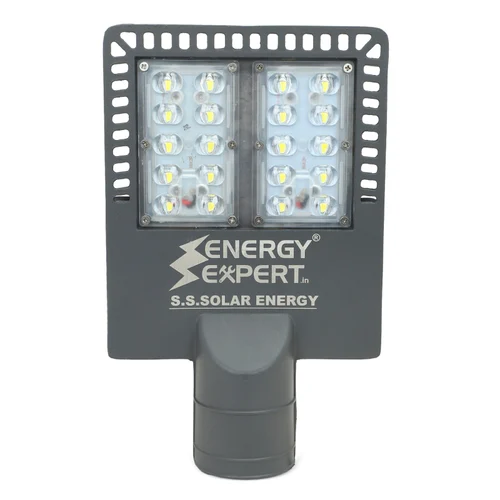


Reviews
There are no reviews yet.