
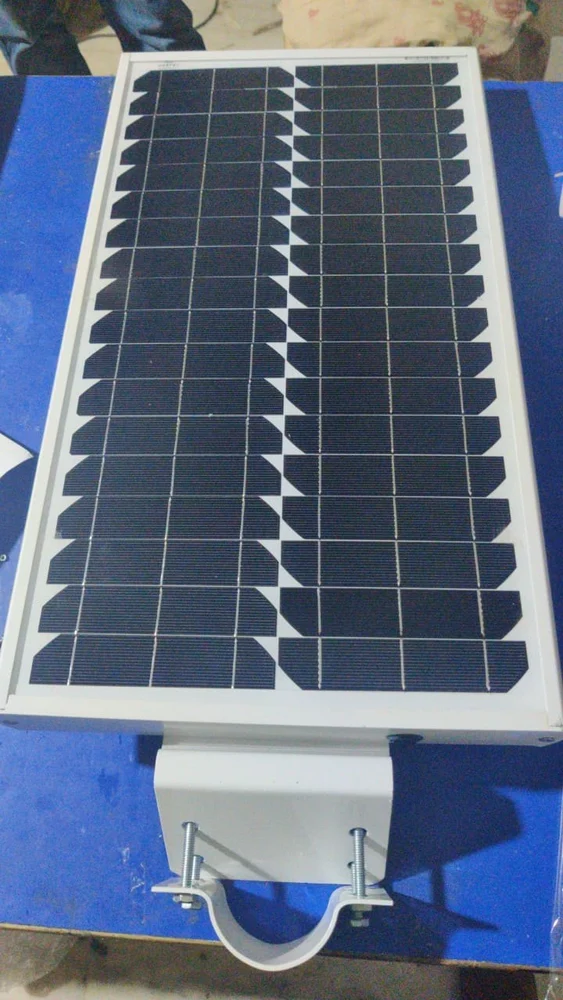
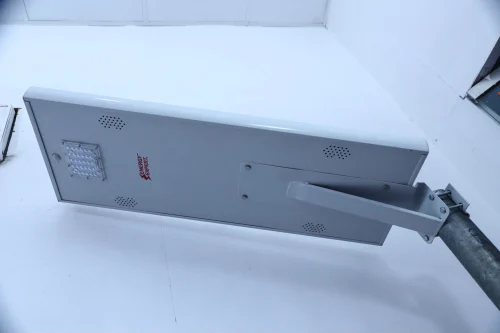

30w ALL IN ONE Solar Street Lighting System
Original price was: ₹9,555.00.₹8,555.00Current price is: ₹8,555.00.
30W ALL IN ONE Solar Street Lighting System delivers dependable outdoor illumination with integrated solar technology and low-maintenance operation.
Description
Choosing the right outdoor lighting system requires more than selecting a light based on wattage. Buyers must consider illumination requirements, installation conditions, energy efficiency, operating schedules, and long-term maintenance. A 30W ALL IN ONE Solar Street Lighting System offers an integrated approach to outdoor illumination by combining solar power generation, battery storage, and LED lighting in a compact assembly.
This system is worth considering for internal roads, residential developments, pedestrian routes, small parking areas, institutional premises, and other locations where an appropriately designed solar lighting solution can meet the required lighting levels.
Why Is a 30W Integrated Solar Street Light a Practical Option?
A 30W integrated solar street light is designed to simplify the relationship between solar energy collection, battery charging, and nighttime illumination. Because the principal components are combined into one assembly, the system can reduce the complexity associated with separately installed lighting and energy-storage equipment.
For projects with multiple lighting points, a consistent product configuration can also simplify installation planning, routine inspection, and spare-part management.
The suitability of a 30W model depends on the illumination required at ground level. Road width, pole height, spacing, surrounding obstructions, and the distribution of light all influence whether this wattage is appropriate.
Important Design Considerations for a 30W Solar Street Lighting System
Lighting Distribution and Road Coverage
The effectiveness of a street light depends on how evenly the light reaches the intended area. A luminaire with suitable optical distribution can help minimize dark patches between poles and improve visibility for pedestrians and vehicles.
Before finalizing the installation, evaluate the road dimensions, mounting height, pole spacing, and required illuminance. A photometric layout is particularly useful for larger developments and public infrastructure projects.
Solar Energy Generation
The photovoltaic panel must generate enough energy to support the planned lighting schedule and recharge the battery. Local sunlight conditions, seasonal weather, panel orientation, shading, and system losses all influence energy production.
A correctly designed system accounts for these variables rather than relying on the LED wattage alone.
Battery Sizing and Operating Schedule
The battery determines how much energy can be stored for nighttime operation. Its capacity should be matched to the daily lighting load, desired backup duration, and controller settings.
Projects requiring longer operating hours or operation through several cloudy days may need a different battery and solar panel configuration. The manufacturer’s technical datasheet should specify the actual battery ratings and expected operating conditions.
Mounting and Environmental Conditions
Outdoor lighting equipment must withstand the conditions at the installation site. Pole strength, mounting hardware, wind exposure, moisture protection, temperature, and dust should all be considered during planning.
The enclosure’s actual ingress protection rating should be confirmed from the manufacturer’s documentation.
Where Can a 30W ALL IN ONE Solar Street Lighting System Be Used?
Residential Development Projects
Residential developments need suitable illumination around internal roads, pedestrian access routes, and shared outdoor spaces. Solar street lights can be considered where independent lighting operation is desirable and the site receives sufficient sunlight.
Pedestrian and Walking Routes
Walkways in campuses, parks, and institutional premises may benefit from appropriately positioned solar-powered luminaires. The required spacing should be determined by the light distribution and the illumination level needed for safe movement.
Small Commercial Parking Areas
Solar lighting can support selected outdoor parking spaces, building entrances, and access routes. The lighting design should account for vehicle movement, pedestrian activity, and areas that require greater visibility.
Farmhouses and Agricultural Properties
Properties outside established urban electrical infrastructure may use standalone solar lighting for entrances, internal access roads, and selected outdoor areas. Solar exposure and seasonal operating requirements are important when selecting equipment.
Educational and Institutional Campuses
Schools, training centres, and other institutions can evaluate integrated solar street lights for suitable outdoor circulation areas. Installation planning should include pedestrian movement, security requirements, and maintenance access.
Industrial Access Routes
Selected internal roads and outdoor pathways within industrial premises may use solar-powered lighting where the required illumination can be achieved. Areas involving heavy vehicle movement or demanding visual tasks may require a higher-performance lighting design.
Advantages of Integrated Solar Lighting for Project Planning
Reduced dependence on grid infrastructure: Solar-powered units can operate without a routine grid electricity connection when the system is correctly designed and charged.
Simplified installation planning: Integrating the principal components into one assembly can reduce external wiring and the number of separately mounted items.
Flexible placement: Lighting points can be considered in locations where extending conventional electrical infrastructure would be difficult or costly.
Predictable maintenance routines: Standardized units can help maintenance teams plan inspections, cleaning, and component replacement.
Renewable energy utilization: The system uses solar energy for normal operation, helping reduce dependence on conventional electricity sources.
Independent operation: Each correctly configured unit can function independently, reducing reliance on a centralized power supply.
Actual cost savings and operational reliability depend on product quality, site conditions, installation practices, and maintenance.
Technical Details to Verify Before Purchasing
The term 30W describes the rated LED power, not the complete energy capacity of the system. Buyers should request the following information before approving a product:
| Technical Parameter | What to Verify |
|---|---|
| LED power | Confirm rated 30W output |
| Luminous flux | Manufacturer-rated lumens |
| Solar panel | Rated peak power in Wp |
| Battery | Chemistry, voltage, capacity, and usable energy |
| Controller | Charging protection and lighting modes |
| Operating schedule | Daily lighting hours and dimming profile |
| Backup performance | Rated autonomy under stated conditions |
| Light distribution | Optical design and photometric data |
| Enclosure | Verified IP rating |
| Mounting | Compatible pole and mounting arrangement |
| Warranty | Separate coverage and exclusions for components |
| Compliance | Applicable product tests and tender documentation |
This information allows buyers to compare different models on measurable performance instead of relying only on product names or advertised wattage.
How to Evaluate the Total Cost of a Solar Street Lighting Project
The purchase price is only one part of the overall project cost. A useful comparison should include equipment, mounting structures, transportation, installation, maintenance, and future battery replacement where applicable.
For projects involving many lighting points, evaluate the expected energy performance, warranty support, replacement-part availability, and ease of servicing. These factors can have a substantial effect on the total cost of ownership.
A solar lighting proposal should also specify what is included in the supply, such as poles, brackets, fasteners, installation work, and other accessories. Clear documentation helps prevent misunderstandings during procurement and execution.
Why Consider Energy Expert for Your Solar Lighting Requirements?
Energy Expert is a solar lighting brand of S.S. Solar Energy Pvt. Ltd., with experience in the solar energy sector since 2008.
For a 30W all-in-one solar street lighting requirement, buyers should assess the available product configuration against the project’s illumination targets, site conditions, operating schedule, and technical compliance needs.
Whether the application involves residential development, commercial premises, institutional pathways, or infrastructure planning, the right selection should be supported by verified specifications and appropriate installation guidance.
FAQs
1. What should I check first when selecting a 30W all-in-one solar street light?
Start with the required illumination, installation height, pole spacing, daily operating hours, and expected backup duration. Then verify that the solar panel and battery meet those requirements.
2. Does a 30W rating determine the brightness of the light?
The wattage indicates the rated electrical power of the LED. Actual brightness depends on luminous flux, LED efficacy, optical design, and operating conditions.
3. Can a 30W solar street light operate during cloudy weather?
The battery can supply stored energy when solar generation is reduced, but operating performance depends on the available charge, battery capacity, previous sunlight, and lighting schedule.
4. Is a 30W model suitable for every road?
No. Suitability depends on road width, illumination requirements, mounting height, pole spacing, and light distribution. Some roads require higher-output luminaires or a different layout.
5. What documents should a buyer request from a manufacturer?
Request the product datasheet, battery and solar panel specifications, applicable test reports, warranty terms, installation guidance, and any compliance documents required by the project.
Related products
-
- Sale!
- All In One Solar Street Light
40W All in One LED Street Light
- Original price was: ₹8,000.00.₹6,999.00Current price is: ₹6,999.00.
- Add to cart
-
- Sale!
- All In One Solar Street Light
12W All in One LED Street Light
- Original price was: ₹11,000.00.₹8,950.00Current price is: ₹8,950.00.
- Add to cart
-
- Sale!
- Solar Street Lighting System, Uncategorized
60W Solar LED Street Lighting System
- Original price was: ₹5,777.00.₹4,777.00Current price is: ₹4,777.00.
- Add to cart


Reviews
There are no reviews yet.