
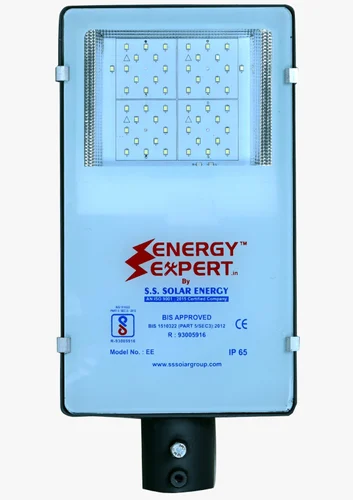
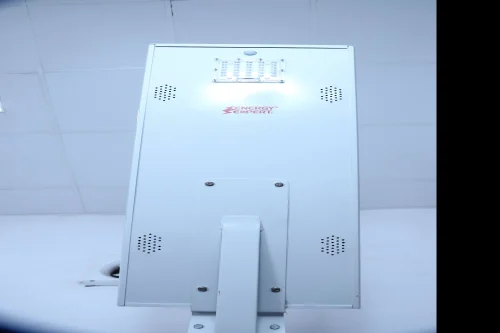


90w ALL IN ONE Solar Street Lighting System
Original price was: ₹14,999.00.₹13,999.00Current price is: ₹13,999.00.
90W ALL IN ONE Solar Street Lighting System delivers efficient outdoor illumination with integrated solar technology and low-maintenance performance.
Description
A 90W ALL IN ONE Solar Street Lighting System is an energy-efficient outdoor lighting solution designed to provide illumination in areas where conventional electricity may be expensive, unavailable, or difficult to access. By integrating the LED light, solar panel, rechargeable battery, and intelligent control system into a single compact unit, this lighting solution simplifies installation and reduces dependence on grid electricity.
Suitable for roads, residential societies, industrial premises, parking areas, village streets, campuses, and public infrastructure, a 90W all-in-one solar street light offers a practical approach to sustainable outdoor lighting. Its performance depends on solar panel capacity, battery specifications, sunlight availability, operating hours, and the lighting requirements of the installation site.
What Is a 90W ALL IN ONE Solar Street Lighting System?
A 90W ALL IN ONE Solar Street Lighting System is an integrated solar-powered lighting unit that uses energy from sunlight to illuminate outdoor spaces after sunset. Unlike conventional street lights, it does not require a continuous grid electricity connection for normal operation.
The integrated design combines essential lighting components into one housing, helping reduce installation complexity and external wiring. Depending on the model, the system may include an LED luminaire, photovoltaic solar panel, lithium battery, charge controller, light sensor, and motion detection functionality.
This type of solar street lighting system is particularly useful for infrastructure projects, rural electrification, commercial properties, and outdoor locations that require independent lighting solutions.
Key Components of a 90W All-in-One Solar Street Light
1. High-Efficiency LED Luminaire
The LED lighting unit produces illumination while consuming less electrical power than many conventional lighting technologies. The actual brightness, light distribution, and coverage depend on the LED design, optical lens, luminous efficacy, and installation height.
2. Solar Photovoltaic Panel
The solar panel converts sunlight into electrical energy. During the day, the generated electricity is used to charge the battery through the system’s charge controller. The panel’s wattage should be selected according to the lighting load, local solar conditions, and required backup duration.
3. Rechargeable Battery
The battery stores solar energy for nighttime operation. Battery chemistry, capacity, operating temperature, and depth of discharge influence the overall performance and backup time of the lighting system. Lithium-based batteries are commonly used in compact integrated solar lighting products.
4. Intelligent Solar Charge Controller
The charge controller manages battery charging and helps protect the battery against inappropriate charging and discharging conditions. Depending on the design, it may also control LED operation, brightness levels, and energy-saving modes.
5. Automatic Light Sensor
A dusk-to-dawn control function allows the light to switch on automatically when ambient light decreases and switch off or enter charging mode during daylight. This reduces the need for manual operation.
6. Weather-Resistant Housing
The outdoor enclosure protects the internal components from environmental exposure. Buyers should check the specified IP protection rating, corrosion resistance, operating temperature range, and applicable product test reports before purchasing.
How Does a 90W Solar Street Lighting System Work?
The system operates through a straightforward solar energy conversion process.
Step 1: Solar energy generation
During daylight hours, the photovoltaic panel converts sunlight into electrical energy.
Step 2: Battery charging
The charge controller regulates the electricity supplied to the rechargeable battery, storing energy for use after sunset.
Step 3: Automatic activation
When ambient light falls below the controller’s programmed threshold, the lighting unit switches on automatically.
Step 4: Nighttime illumination
The battery powers the LED luminaire throughout the programmed operating period. Depending on the controller, the light may maintain full brightness or use dimming modes to conserve energy.
Step 5: Daytime recharge
At sunrise, the system switches off or enters its daytime mode and resumes battery charging.
Actual operating hours depend on battery capacity, solar generation, lighting settings, weather conditions, and system design.
Major Features of a 90W ALL IN ONE Solar Street Lighting System
- Integrated Construction: Combines major lighting components in a compact assembly.
- Solar-Powered Operation: Uses renewable energy generated from sunlight.
- Automatic Switching: Supports automatic day-and-night operation when the appropriate sensor is provided.
- Energy-Efficient LED Technology: Provides outdoor illumination with a controlled electrical load.
- Simplified Installation: Reduces the need for separate component mounting and extensive electrical connections.
- Low Routine Operating Costs: Does not require grid electricity for normal solar-powered operation.
- Outdoor Applications: Designed for use in suitable outdoor environments when the specified protection ratings are met.
- Optional Smart Controls: Selected models may support motion sensors, programmable dimming, or remote monitoring.
Features vary by manufacturer and model. Buyers should verify the actual product datasheet before finalizing specifications.
Benefits of a 90W All-in-One Solar Street Light
Reduced Dependence on Grid Electricity
The system generates and stores solar energy, helping reduce dependence on conventional electricity supplies for outdoor lighting.
Convenient Installation
The integrated design can simplify installation compared with systems that require separate solar panels, battery enclosures, and multiple electrical connections. A suitable pole, mounting bracket, and secure fixing arrangement are still necessary.
Suitable for Remote Locations
Solar street lights can be useful in villages, rural roads, farm access routes, and other locations where extending electrical infrastructure is challenging.
Environmentally Responsible Lighting
Solar-powered operation uses renewable energy and can reduce operational emissions associated with grid electricity. The environmental impact of the complete product also depends on manufacturing, battery replacement, and end-of-life recycling.
Lower Routine Maintenance Requirements
An integrated unit can reduce the number of separately installed components. Periodic cleaning, inspection, battery health checks, and replacement of worn components may still be required.
Flexible Outdoor Lighting Applications
The system can be considered for new infrastructure projects, outdoor development schemes, commercial premises, and selected retrofit applications.
Applications of a 90W ALL IN ONE Solar Street Lighting System
Roads and Streets
Solar-powered lighting can support illumination on internal roads, access roads, village streets, and selected public road sections. Road width, pole spacing, mounting height, and photometric calculations should be assessed before installation.
Residential Societies
Housing societies, gated communities, and residential developments can use solar lighting for internal roads, pedestrian paths, and selected common areas.
Industrial Areas and Factories
Suitable installations include factory access roads, peripheral pathways, internal circulation areas, and outdoor spaces where independent lighting is beneficial.
Parking Areas
Solar street lights can illuminate selected parking zones, entry points, and vehicle circulation routes, subject to adequate light distribution and coverage.
Educational Institutions
Schools, colleges, training centres, and campuses can consider solar-powered lighting for pathways, outdoor circulation areas, and other suitable spaces.
Parks and Public Spaces
The integrated lighting design can be useful for gardens, walkways, community spaces, and outdoor recreational areas.
Rural and Remote Infrastructure
Solar street lighting may be appropriate for village pathways, community facilities, rural development projects, and locations where grid connectivity is limited.
Technical Specifications to Check Before Purchasing
The term 90W generally identifies the stated LED power rating. It does not, by itself, establish the battery capacity, solar panel wattage, illumination level, or backup duration.
| Parameter | Specification to Verify |
|---|---|
| Product name | 90W ALL IN ONE Solar Street Lighting System |
| LED power | 90W, as specified by the manufacturer |
| Solar panel | Rated wattage, technology, and dimensions |
| Battery | Chemistry, rated voltage, capacity, and usable energy |
| Charge controller | Controller type and charging protections |
| Lighting control | Dusk-to-dawn operation and dimming options |
| Motion sensor | Optional or included, as applicable |
| Operating duration | Manufacturer-declared hours under stated conditions |
| Backup performance | Verified against the specified load and design conditions |
| Housing protection | Declared IP rating and supporting test documentation |
| Mounting arrangement | Compatible bracket, pole diameter, and installation height |
| Warranty | Separate terms for the luminaire, battery, panel, and controller |
| Compliance | Applicable standards and test reports for the product |
Important: Actual panel wattage, battery capacity, backup hours, and warranty must be taken from the selected model’s approved datasheet. Do not assume these specifications from the 90W rating alone.
Installation Guidelines
Correct installation is essential for dependable performance and effective illumination.
- Conduct a site survey: Evaluate the location, road width, lighting requirements, shading, and available sunlight.
- Select the mounting position: Place the solar panel where it receives sufficient direct sunlight throughout the day.
- Choose a suitable pole: Confirm the pole height, structural strength, bracket compatibility, and foundation requirements.
- Secure the lighting unit: Follow the manufacturer’s mounting instructions and ensure all fasteners are properly tightened.
- Configure the controller: Set the operating mode, dimming schedule, and motion-sensor settings if supported.
- Test the system: Verify charging, automatic switching, LED operation, and programmed controls.
- Document the installation: Record the product model, serial number, warranty details, and commissioning information.
For public road projects, lighting calculations and applicable road-lighting requirements should be reviewed before deciding pole spacing and installation height.
Maintenance Tips for Long-Term Performance
Although solar street lights generally require limited routine maintenance, regular inspection can help maintain their performance.
- Clean the solar panel periodically to remove dust, leaves, and other obstructions.
- Inspect mounting brackets, bolts, and pole structures for damage or loosening.
- Check the luminaire and enclosure for visible damage or moisture ingress.
- Monitor battery performance and investigate unusual reductions in operating duration.
- Verify the automatic switching function and controller settings.
- Replace components using compatible, manufacturer-approved parts.
- Dispose of or recycle batteries through appropriate collection channels.
Maintenance frequency should be adjusted to local dust levels, rainfall, temperature, and manufacturer recommendations.
How to Choose the Right 90W Solar Street Lighting System
Before selecting a 90W all-in-one solar street light for a commercial or public infrastructure project, evaluate the following factors.
1. Required illumination: Establish the target lux level, road geometry, uniformity requirements, and expected light distribution.
2. Solar panel capacity: Check whether the panel can generate sufficient daily energy under local solar conditions.
3. Battery capacity: Confirm that usable battery energy supports the required operating schedule and backup expectations.
4. Weather conditions: Consider seasonal sunlight variation, high temperatures, rainfall, dust, and other local environmental factors.
5. Lighting controls: Choose suitable dimming or motion-sensor features where energy conservation is important.
6. Product quality: Review construction quality, electrical protection, applicable test reports, and component specifications.
7. Warranty and service: Check warranty coverage, exclusions, replacement arrangements, and availability of technical support.
8. Total ownership cost: Compare the purchase price with installation, maintenance, battery replacement, and expected service life.
For tenders and bulk procurement, verify that the quoted product meets every mandatory technical requirement rather than relying on the wattage rating alone.
90W Solar Street Light vs. Conventional Street Lighting
| Comparison Factor | Solar Street Light | Conventional Grid-Powered Light |
|---|---|---|
| Energy source | Solar energy stored in a battery | Electricity supplied by the grid |
| Grid connection | Not required for normal solar operation | Generally required |
| Initial installation | Includes solar and battery components | Depends on electrical infrastructure |
| Energy expenses | No routine grid electricity cost for solar operation | Ongoing electricity consumption costs |
| Weather dependency | Solar charging varies with sunlight | Not dependent on sunlight |
| Maintenance | Includes panel and battery checks | Depends on luminaire and electrical infrastructure |
| Remote deployment | Can be useful where grid access is limited | May require grid extension |
The more suitable option depends on project conditions, electricity availability, installation costs, required lighting performance, and lifecycle economics.
FAQs
1. What is a 90W ALL IN ONE Solar Street Lighting System?
It is an integrated solar-powered outdoor lighting unit designed to combine an LED luminaire, solar panel, battery, and associated control components in a compact assembly.
2. How many hours can a 90W solar street light operate?
Operating hours depend on the usable battery capacity, LED load, controller settings, charging conditions, and required backup. Refer to the manufacturer’s declared performance under clearly specified test conditions.
3. Does a 90W all-in-one solar street light need electricity from the grid?
No grid electricity connection is normally required for its intended solar-powered operation. The solar panel charges the battery during daylight, and the battery supplies power to the LED at night.
4. Is a 90W solar street light suitable for village roads?
It can be suitable for selected village roads, but the decision should be based on road width, required illumination, pole spacing, solar availability, and the verified system specifications.
5. Can the light switch on automatically at night?
Yes, models equipped with an appropriate light sensor and controller can switch on automatically at dusk and switch off or enter charging mode during daylight.
Related products
-
- Sale!
- Solar Street Lighting System
12W Solar LED Street Lighting System
- Original price was: ₹1,200.00.₹1,100.00Current price is: ₹1,100.00.
- Add to cart
-
- Sale!
- Solar Street Lighting System
9W Solar LED Street Lighting System
- Original price was: ₹2,499.00.₹1,499.00Current price is: ₹1,499.00.
- Add to cart
-
- Sale!
- Solar Street Lighting System
20 W Led Solar Street Lighting System
- Original price was: ₹8,500.00.₹7,500.00Current price is: ₹7,500.00.
- Add to cart


Reviews
There are no reviews yet.